 ASVAB Camp
Final-Week Objective and Decision Rule
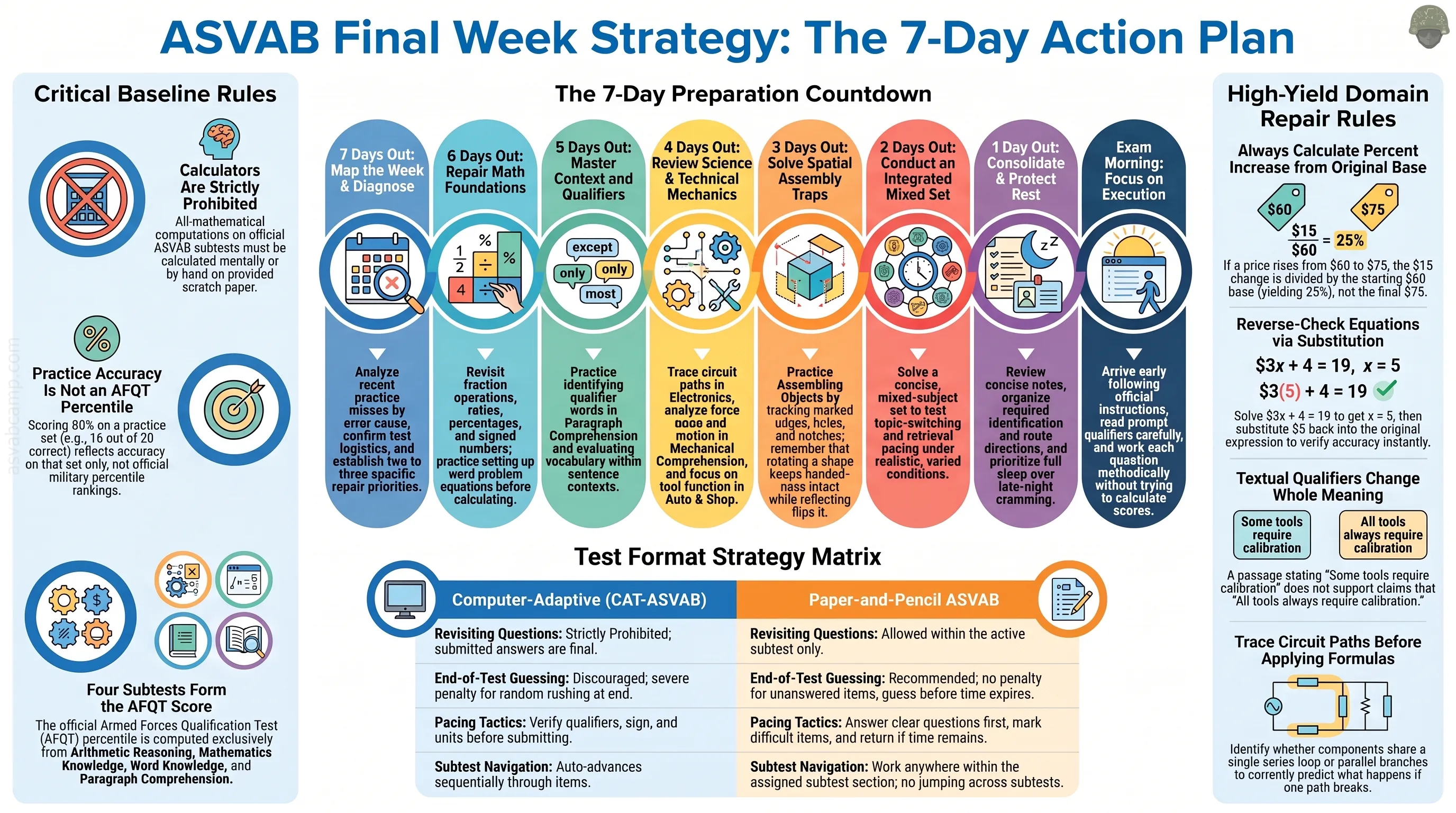
The final week is for converting prepared knowledge into reliable decisions under realistic testing conditions. It is not a contest to consume the greatest number of pages or to memorize every possible answer. Choose a small number of weak concepts that can still improve, revisit the method, solve fresh examples, and check whether the correction holds. Protect sleep, logistics, and confidence without pretending that these habits guarantee a particular result. This lesson provides an adaptable planning framework, not an official testing schedule or score predictor.
What the ASVAB Measures
The ASVAB includes verbal, mathematics, science and technical, and spatial aptitude areas. Its subtests include Arithmetic Reasoning, Word Knowledge, Paragraph Comprehension, Mathematics Knowledge, General Science, Electronics Information, Auto and Shop Information, Mechanical Comprehension, and Assembling Objects. A final review should use the names and content of actual subtests, not an imagined universal question style. The exact administration differs between computer and paper formats. Review the official subtest descriptions before deciding which materials deserve scarce final-week time.
AFQT and Subtest Scores Are Different
Four subtests—Arithmetic Reasoning, Mathematics Knowledge, Word Knowledge, and Paragraph Comprehension—contribute to the AFQT calculation. AFQT is an official percentile-based qualification measure, not the number of practice questions answered correctly. Other subtests may inform military occupational qualification through service-specific composites. A learner who wants to improve arithmetic foundations should work on those foundations, but must not translate a ten-point change in homemade practice accuracy into an identical change in official AFQT percentile. A plan targets skills; the testing program calculates formal scores.
Diagnose Before You Schedule
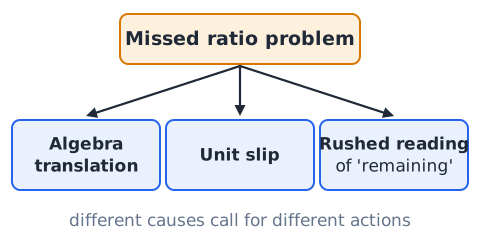
Begin with the most recent original practice questions, then classify errors by cause. A missed ratio problem may reveal an algebra translation error, a unit slip, or a rushed reading of the word 'remaining.' Those diagnoses call for different actions. Write a short worksheet outside the application, if useful, with topic, error cause, correction rule, and one new example. A plan built from specific mistakes usually directs effort better than repeating every familiar chapter equally.
Choose Two or Three Repair Priorities
Use limited final-week time for a manageable number of improvements. A topic with frequent errors, clear conceptual weaknesses, and enough available practice may be worth an extended review. A topic with one isolated slip may need only a quick reminder. Do not neglect test directions or rest because a narrow topic feels urgent. An example priority list might be translating word problems, reading exception words, and tracing circuits. This is an illustrative choice rather than a mandatory weighting or an official recommendation for a particular score.
Allocate Time by Evidence
Time allocation should respond to what the learner misses, not simply which lessons are longest. For example, a ninety-minute focused block might include thirty-five minutes for a difficult concept, twenty-five for a second weakness, twenty for fresh questions, and ten for explaining errors. Check that the parts add to the available time. This example is flexible, and brief breaks may be scheduled separately. Avoid using a fixed schedule as proof of improvement. The benefit comes from accurate correction and retention, not from the clock alone.
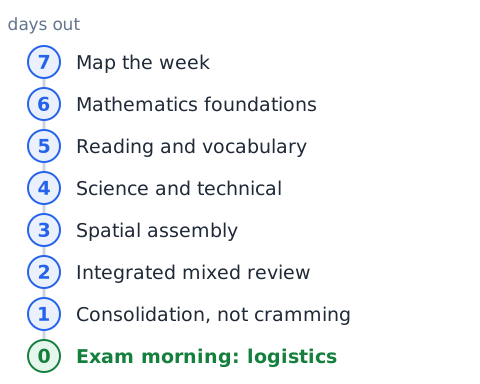
Seven Days Out: Map the Week
A week before the exam, confirm the test format, location or testing arrangements, required identification, and the instructions supplied by the authorized testing organization. Review one small diagnostic sample across important subtests and note the reason for each miss. Decide which reference sheets or concept notes to revisit. Leave room for unexpected scheduling changes or an extra explanation that takes longer than planned. The purpose of a seven-day map is to reduce decision fatigue, not to impose an identical calendar on every applicant.
Six Days Out: Repair Mathematics Foundations
Revisit arithmetic procedures that repeatedly cause errors: fractions, ratios, percentages, unit conversion, signed numbers, and expressions. For word problems, identify what is known, define the unknown, write a relationship, solve, and check units. Use new numbers so that understanding is tested rather than answer memory. Resist starting an extensive new mathematics course if the fundamentals are still unstable. A worked example completed correctly without time pressure is a first step; follow with a different problem before calling the weakness repaired.
Five Days Out: Reading and Vocabulary
Practice extracting the main idea, recognizing a supported inference, and respecting qualifiers such as except, only, and most. For Word Knowledge, study word meanings in short contexts, including common prefixes and roots, but avoid treating a familiar-looking root as proof. Explain why distractors are not exact synonyms when the question asks for the closest meaning. A short paragraph read accurately is more useful than scanning a long passage without retention. Keep the review varied enough to expose both comprehension and vocabulary weaknesses.
Four Days Out: Science and Technical Concepts
Select recurring issues from General Science, Electronics Information, Auto and Shop Information, or Mechanical Comprehension. For mechanical questions, connect force, torque, speed, and work to observable physical relationships. For electronics, trace the circuit and distinguish series from parallel paths. For science, name the principle and predict how a changed variable affects the system. For automotive or shop items, understand tool purpose and safe terminology instead of memorizing isolated labels. Study concepts rather than assuming a single diagram will reappear unchanged.
Three Days Out: Spatial Assembly
Assembling Objects questions assess the ability to determine how parts would appear when put together. Review rotations, matching edges, consistent joining marks, and the difference between turning and reflecting a piece. Practice tracing a distinctive notch or marked corner through possible arrangements. Choose fresh drawings so familiarity with a previous outline does not hide confusion. When several choices appear plausible, eliminate those with mismatched connection points or impossible overlaps. These exercises are original preparation material, not released or live ASVAB items.
Two Days Out: Integrated Mixed Review
Use a modest mixed set to switch between subjects and check whether a skill remains available outside a single-topic block. Mix verbal, math, science, and spatial questions as relevant, but do not claim a homemade set duplicates official difficulty or adaptive scoring. Review each incorrect response for a specific reason. If a concept error persists, use a brief targeted correction rather than taking another long mixed exam immediately. The main value of a mixed set is the evidence it creates about retrieval and pacing under varied demands.
One Day Out: Consolidation, Not Cramming
The day before testing is better suited to concise notes, a few representative examples, equipment or document checks, and a consistent sleep schedule than to an exhausting all-night cram session. Review only the high-value rules you have already practiced. Stop chasing speculative question lists or exaggerated score guarantees. Prepare the route and arrival plan if traveling to a test site. If a test provider supplies specific instructions, those govern. The purpose is to arrive able to apply existing knowledge calmly, not to maximize last-minute volume.
Exam Morning: Logistics and Focus
Follow the official appointment instructions, bring acceptable identification, and plan for the arrival time communicated by the testing site. The ASVAB guidance explains that a late arrival can require rescheduling and that a calculator is not permitted. Eat and hydrate in the manner that normally works for you, without making medical claims about performance. Avoid an unfamiliar routine that creates distractions. Immediately before the session, focus on reading directions carefully and working each question methodically rather than attempting to calculate a predicted final score.
CAT-ASVAB: No Return After Submission
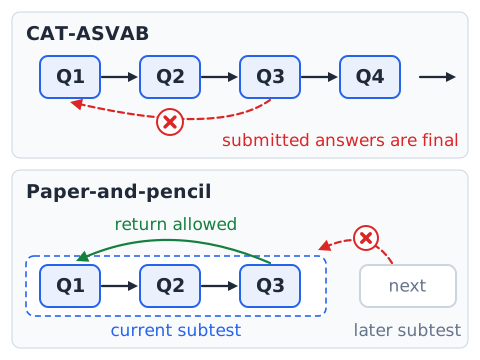
In the computer-adaptive CAT-ASVAB, an answered item cannot be revisited. A final-week practice drill should therefore include selecting the intended option, checking the question's qualifier, and only then moving on. This is not an invitation to spend unlimited time on one problem: each subtest has a limit. Unlike paper testing, a strategy of skipping uncertain items and returning later is not suitable here. Ask testing staff about unclear procedures rather than guessing how the interface works. Official instructions, not an unofficial app, control the session.
Paper ASVAB: Review Within a Subtest
Paper-and-pencil procedures permit reviewing responses and returning to skipped questions within the current subtest when time allows; they do not permit freely moving between earlier and later subtests. A sensible tactic is to handle familiar questions efficiently, mark uncertain ones according to directions, and return if allowed and time remains. Make sure the answer sheet has one intended response for each item and that changes are erased completely. This method belongs to the paper format and should not be misapplied to the adaptive computer format.
Guessing Requires Format Awareness
The official preparation guidance distinguishes paper and adaptive guessing strategies. On the paper exam, unanswered items can be guessed at before time expires because there is no additional penalty for random guessing. On CAT-ASVAB, rushing through a series of random final responses is discouraged because a relatively large penalty may apply to such end-of-subtest patterns. In both formats, reading the question and eliminating clearly false options is preferable when feasible. Do not turn this nuanced guidance into the false statement that every ASVAB format has identical scoring behavior.
Know the Clock Without Worshiping It
Time pressure matters because subtests have different limits, yet racing through easy questions can create preventable errors. Practice a process: read the prompt, identify the task, make a compact plan, solve, check obvious constraints, and select an answer. If you become stuck, use a reasoned elimination rather than inventing a new formula. The final week should include a few timed sets but also untimed repair of any concept that still fails. Timing is a constraint on reasoning, not a substitute for it.
No Calculator and Better Number Sense
Official applicant information states that calculators are not allowed for the ASVAB. Practice mental estimates, short written arithmetic, fraction simplification, and checking orders of magnitude. For example, if a quantity rises from forty to fifty, the increase is ten relative to the original forty, or twenty-five percent—not ten percent. Estimate first to catch an answer that is plainly too large or small. A pencil-and-paper method must still be practiced under the rules of the actual test administration; do not assume every electronic tool will be available.
Translate Word Problems Into Relationships
An arithmetic word problem often hides a simple relationship in a longer story. Underline the requested quantity, identify given quantities and units, and decide whether the operations represent part-whole, rate, proportion, or change. A phrase like 'fifteen percent of the original amount' specifies the base of the percentage. Write the model before doing arithmetic to avoid choosing the wrong denominator. After solving, substitute the result into the original wording. In the final week, repeat this complete sequence on short fresh examples instead of memorizing only formulas.
Arithmetic: Percentage Base Matters
A score change, price discount, or distance increase needs a clearly identified baseline. When an amount changes from eighty to one hundred, the change is twenty and the percent increase is twenty divided by eighty, or twenty-five percent. Dividing by the final one hundred would answer a different question. Always ask 'percent of what?' before deciding how to compute. A reliable final-week check is to explain that denominator aloud, then solve a second item with different values. This concept appears in many nonidentical settings.
Mathematics Knowledge: Reverse-Check Answers
For equations, preserve equality by performing the same legal operation on both sides. If three times x plus four equals nineteen, subtract four and divide by three to obtain x equals five. Substitution confirms three times five plus four equals nineteen. For geometry, identify which side, angle, area, or volume is actually requested; length and area use different units. During review, practice checking one answer by an inverse operation or substitution. This is often faster than restarting the entire calculation from the beginning.
Paragraph Comprehension: Evidence Before Opinion
A passage question asks what the passage supports, not what happens to be plausible in the world. Identify the main claim and the sentence that bears on the requested detail. Beware answer choices that replace 'some' with 'all' or add causes not stated. During the final week, use brief passages and explain one correct choice and two plausible distractors. This is a stronger demonstration of comprehension than recognizing familiar words. Reasoning from the supplied text helps even when the topic is unfamiliar or interesting.
Word Knowledge: Context Controls Meaning
A word can have several meanings; the sentence determines which sense is relevant. Before viewing the options, paraphrase the word in plain English. Compare each candidate against the sentence's tone and grammar. Prefixes, roots, and related words can narrow possibilities but do not establish the answer alone. A disciplined review includes examples where a seemingly close synonym changes the intended meaning. Practice with new sentences rather than repeating the same flashcard order. The goal is a reliable inference from context, not recognition by shape.
Science: Cause, Variable, and Evidence
Scientific questions commonly require recognizing a mechanism or relationship rather than recalling a flashy fact. Distinguish an observation from an explanation, identify the changed variable, and predict the effect under a stated condition. For example, heating may cause expansion in a material, but a particular device can depend on its structure and operating constraints. Avoid claiming a universal rule when the prompt supplies important exceptions. In the final week, review a diagram and describe what changes and what stays fixed as one variable is altered.
Mechanical Comprehension: Direction Matters
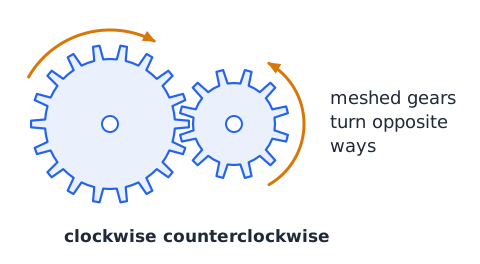
For force and motion, note both magnitude and direction. A lever may trade distance moved for applied force, but it does not create energy. In a pulley question, identify supporting rope segments and whether an idealized assumption is stated. In gears, adjacent meshed gears rotate in opposite directions, but gear trains and belts may change relationships. Briefly sketch arrows if needed. A small number of correctly analyzed examples will transfer better than collecting untested slogans such as 'all wheels turn the same way.'
Electronics: Follow the Actual Path
To review a circuit, identify the source, complete conducting paths, switches, and loads. A broken series path interrupts current through that path; parallel branches can behave differently. Know how current, voltage, and resistance relate, but use a numerical equation only when the conditions are stated. Do not confuse a symbolic drawing with physical wire placement. In the final week, explain one diagram twice: first trace where current can flow, then predict what changes when a switch opens or a component changes.
Auto and Shop: Tool Function Over Label Memory
Review common automotive and workshop concepts as functional relationships: which component performs the task, why the task is needed, and which tool is appropriate. Identifying a fastener shape without knowing how the tool engages it is shallow recall. Conversely, do not invent unsafe hands-on procedures from an exam diagram. This lesson is theoretical test preparation, not authorization to perform maintenance on equipment. Practice distinguishing similar terms by their jobs, such as measuring, fastening, supporting, cooling, or lubricating.
Assembling Objects: Rotation Is Not Reflection
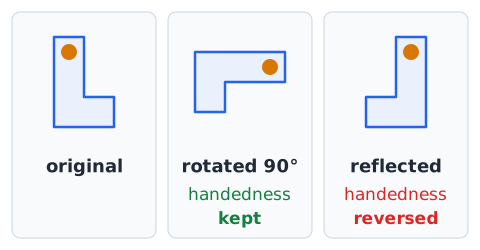
A rotated piece keeps its internal handedness, while a reflected piece reverses it. Track a marked corner, hole, or notch instead of comparing only the outer silhouette. Two pieces that look nearly identical may join differently because their connectors face different directions. In the final week, first test edge compatibility, then relative orientation, and only then the overall outline. Eliminate choices with impossible overlaps or missing marks. Drawing a small orientation arrow on scratch material can make the relationship easier to see.
Learn From Distractors Instead of Memorizing Them
Every plausible wrong option points to a possible misconception. A numerical distractor might use the final rather than initial value as a percentage base. A vocabulary distractor might be a related word that fails in context. A spatial distractor might be a mirror image. When reviewing, state why the wrong answer is tempting and exactly which rule rejects it. This turns a practice set into usable diagnostic evidence. Do not assume that a specific wrong answer will appear on the real exam; carry the reasoning to new problems.
A Fresh-Question Retest Is Better Than Recognition
Correctly answering the same item immediately after reading its explanation is not strong evidence of transfer. Use a new item with different numbers, wording, or geometry that tests the same principle. If you can explain the method before seeing choices, the skill is more likely to be available under unfamiliar conditions. Try both an untimed explanation and a short timed check where appropriate. Record only what is useful to you; a simple worksheet is enough for this workflow.
Separate Knowledge Errors From Timing Errors
An error that occurs even during slow, careful practice suggests a concept or procedure problem. An error that appears only during timed practice may reflect reading, working-memory, or pacing constraints. The remedies differ: explain the concept and practice varied examples for the first; simplify steps and rehearse a reliable checkpoint for the second. Do not label every fast mistake 'carelessness' or every slow mistake 'lack of talent.' The classification is a useful hypothesis to test with a fresh problem, not a formal psychological assessment.
Confidence Is a Decision, Not a Score
Confidence can help a learner commit to a well-supported choice, but feeling certain is not the same as being correct. Before selecting an option, check the requested unit, sign, qualifier, or connector. This quick verification is more useful than repeatedly changing answers because of anxiety. On CAT-ASVAB, the choice is final once submitted, making the pause before selection especially important. A practice confidence rating can guide self-reflection, but it has no direct AFQT conversion.
Use Official Content Descriptions, Not Rumors
Commercial claims about real secret questions, automatic score guarantees, or privileged access are not reliable foundations for study. The official ASVAB program explicitly warns that it does not endorse paid preparation courses or provide controlled live questions to third parties. Our questions are original educational exercises. If a claim contradicts the official program's applicant guidance, verify it before building a study strategy around it. Final-week time is better spent learning concepts than hunting for supposed answer keys.
Interpreting Practice Results Conservatively
A learner who answers eighteen of twenty-four original practice items correctly has seventy-five percent accuracy on that set. That number is not a formal AFQT percentile and cannot be mapped to one without the official scoring process. A different set of items can have different difficulty and content coverage. Use such a result to identify which explanations need review, not to predict enlistment eligibility or occupational assignment. If an answer rate increases, celebrate the specific improvement while keeping the scoring distinction intact.
Final-Week Mini-Assessment Design
A useful short review set contains a balanced mix of the topics most relevant to the learner's observed errors. Do not fill it entirely with the easiest material simply to produce a comforting percentage. Decide before starting whether the purpose is conceptual diagnosis, pacing practice, or retention verification. Afterward, analyze the cause of each miss and one correct answer that relied on guessing. You can create a paper checklist and discard it when finished; persistent personalized scoring is not necessary to teach this lesson.
Protect Accuracy on Qualifier Words
Many wrong answers are caused by overlooking a single direction: not, except, best, least, approximately, or under the stated conditions. Circle or mentally flag the qualifier before reading choices. For mathematical questions, preserve the units and boundary conditions. For reading questions, return to the relevant sentence. For spatial questions, respect the indicated viewpoint. A final-week drill can mix these qualifier types deliberately. The technique is not slower rereading of everything; it is focused attention to information that changes the task.
Stop an Unproductive Study Spiral
If several new questions reveal the same unresolved concept, pause further timed sets and repair the underlying rule. If repeated review produces fatigue and careless mistakes, use a rest period or resume with a smaller task. Neither endless drilling nor abandoning the topic after one miss gives good evidence. Choose one next action: explain a rule, solve a representative fresh example, then retest. This structured reset helps conserve limited time. It is educational planning, not a promise that a particular exam score will follow.
Example: A Ninety-Minute Review Block
Suppose a student has ninety minutes and observed issues with word-problem setup and passage qualifiers. A possible allocation is thirty minutes of arithmetic modeling, twenty-five minutes of passage practice, twenty minutes of mixed fresh questions, and fifteen minutes analyzing mistakes. The arithmetic adds to ninety. If the arithmetic concept remains unclear, reassign time intentionally rather than rushing the rest merely to satisfy the plan. The numbers describe an illustration of prioritization, not official per-subtest requirements.
Example: Recovering a Percentage Mistake
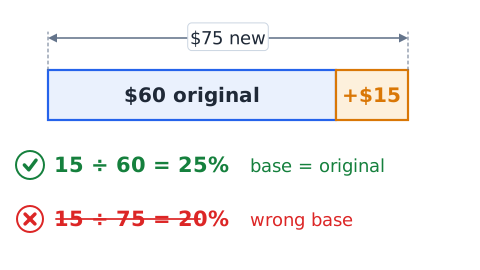
A price rises from sixty dollars to seventy-five dollars. The increase is fifteen dollars. Relative to the starting price, the percentage increase is fifteen divided by sixty, or twenty-five percent. A learner who answers twenty percent likely divided by the ending price instead. The review step is to identify the base, write change divided by original, and solve a new problem with different values. This is stronger than memorizing 'twenty-five percent' without understanding why the denominator is sixty.
Example: Reading a Restrictive Statement
Imagine a passage saying, 'Some tools require calibration before precise measurements.' A question asking what follows cannot justify 'All tools always require calibration.' The word some limits the claim, and the context says nothing about every tool. A final-week reading review should translate quantifiers faithfully. The best choice might be that at least certain tools need calibration for accurate work, without inventing a universal rule. This trains a transferable reasoning habit and reinforces attention to statements actually supported by a passage.
Example: Circuit Branch Versus Series Path
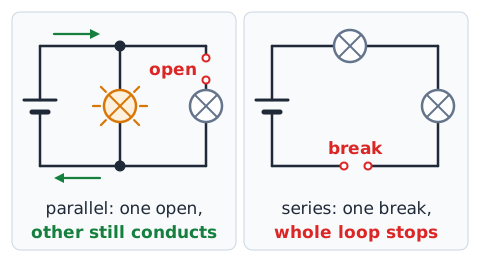
A hypothetical circuit has two parallel lamps connected across a source, each in its own branch. If one branch opens, the other complete branch may still conduct, assuming the source and its connections remain intact. That differs from two lamps in a single series loop, where one break interrupts the loop. The correct answer follows from topology, not simply from counting lamps. A review drawing should make the source connections and branch points explicit rather than relying on an attractive but ambiguous picture.
Example: A Spatial Connector Trap
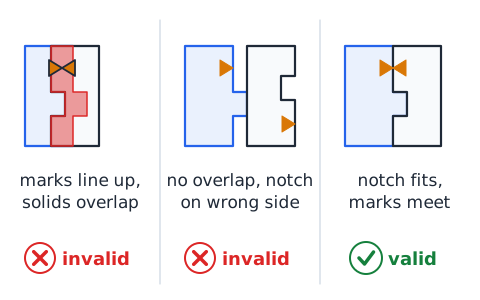
Two pieces each carry a triangle at a joining edge. A proposed solution aligns the triangle marks but overlaps solid material. It is not a valid assembly. A different option might preserve a clear outline but rotate a notch to the wrong side. To select a viable configuration, check both contact compatibility and nonoverlap, then follow any distinguishing marks through the transformations. This layered check can eliminate visually appealing traps. It is general instructional reasoning, not a representation of any controlled ASVAB question.
Example: A Mixed-Set Interpretation
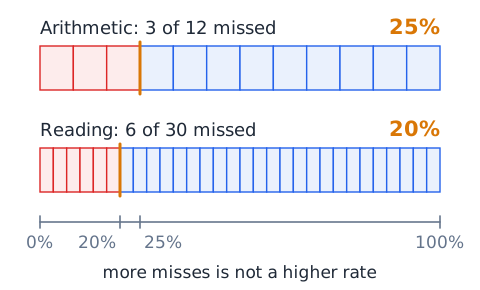
A student misses three of twelve arithmetic questions and six of thirty reading questions. Arithmetic miss rate is twenty-five percent; reading miss rate is twenty percent. Arithmetic has the higher percentage of misses even though reading has more missed items in absolute count. Before investing all study time in arithmetic, also check the nature of mistakes, sample size, and value of each skill. The two denominators matter. This calculation helps plan practice; it does not establish an official AFQT or composite score.
Example: Test-Format Decision
A student preparing for the CAT-ASVAB plans to mark uncertain questions and return after finishing the subtest. That is the wrong process because submitted computer-adaptive answers cannot be revisited. A better plan is to read the question carefully, eliminate implausible responses where possible, choose deliberately, and proceed. A different student taking the paper ASVAB may be allowed to revisit skipped items within the same subtest. Always verify which administration will be used instead of transferring a strategy across formats blindly.
Seven-Item Final Checklist
Before the exam, review the following: confirm the appointment and testing format; locate acceptable identification; check transportation or sign-in requirements; understand calculator restrictions; remember the CAT versus paper answer-review difference; prepare to read qualifiers carefully; and leave time for sleep and normal routines. This checklist organizes details rather than certifying readiness. If your official appointment notice differs, follow it. A checklist should decrease preventable logistical mistakes without encouraging false confidence about unknown exam content or guaranteed outcomes.
Responsible Review Boundaries
This educational product is independent of the official ASVAB program. It uses publicly available descriptions and original exercises, not secure exam items. The official testing organization controls timing, equipment, identity rules, scoring, and reporting. Service eligibility and job assignments can depend on requirements beyond a practice score, and policies can change. Students should confirm current requirements with authorized personnel. The final week is a time for accurate information and careful reasoning, not unsupported claims of guaranteed scores or privileged test content.
Recovery Plan After a Tough Practice Set
A low result on one home practice set need not trigger a marathon of new testing. First count the attempted items, inspect what types of mistakes occurred, and separate new material from familiar material. Choose one repairable idea, read an accurate explanation, work a fresh example, and check understanding later. If the difficulty comes from the test format itself, practice the process rather than simply more subject content. This method turns frustration into a concrete next step without pretending to diagnose future official scores.
Short Self-Test for the Final Evening
Before finishing preparation, explain without looking up the answers: which four subtests contribute to AFQT; why homemade accuracy is not an AFQT percentile (for example, 16 of 20 correct is 80% practice accuracy, not an AFQT percentile of 80); what changes when a question is submitted on CAT-ASVAB; what options exist for returning to items on paper; why qualifiers matter; and how you would repair a repeated arithmetic error. If any explanation is vague, use one concise correction and a fresh example. Then stop according to your planned rest schedule. This reflection is optional and need not be stored in an account.
Final Summary and Next Action
A successful final-week review concentrates on transferable rules, fresh practice, realistic pacing, sound format-specific tactics, and practical exam logistics. Use original short sets to identify specific learning gaps rather than to predict official percentiles. Read the actual question, check the qualifier and units, and select a reasoned option. On the adaptive computer version, submitted choices cannot be revisited. On the paper version, review is permitted within the active subtest when time remains. Protect sleep, reject score guarantees, and rely on current official instructions.
 English ▾