 ASVAB Camp
Outcome: prove a detail from the passage
After this lesson you should be able to answer a detail question by pointing to the exact words that support your choice. You will practice locating the right sentence, keeping names, numbers, times, and conditions attached to the correct things, and rejecting choices that sound close but change a fact. Your goal is proof, not a feeling that an answer seems right.
What Paragraph Comprehension measures
The Paragraph Comprehension (PC) subtest of the ASVAB measures how well you can get information from short passages. Many questions ask about a specific fact the passage states: who did something, when it happened, how much, or under what condition. Because PC also counts toward the AFQT, careful detail reading can make a real difference to your overall score. Every answer you need is in the passage itself.
What counts as a supporting detail?
A supporting detail is a specific piece of information that backs up or fills in the main point. It might be a name, a date, a place, an amount, a step in a process, a reason, or an example. Detail questions usually begin with words such as who, what, when, where, how many, or according to the passage. The answer is stated, not guessed.
Main idea versus a directly stated detail
The main idea is the overall point of the passage; a detail is one specific fact inside it. If a passage says a hardware store extended its hours, added online ordering, and hired two more cashiers to serve customers faster, the main idea is better customer service. A detail question might ask how many cashiers were hired: two. A choice describing the overall purpose does not answer a question about one fact.
Explicit facts versus reasonable guesses
An explicit fact is written in the passage. A reasonable guess is something that might be true but is not stated. If a passage says a crew finished paving before lunch, you cannot claim they started at dawn, even if that seems likely. For detail questions, choose only what the words actually say or clearly restate.
A three-step evidence routine
First, decide exactly what the question asks for: a time, a person, a reason, a number, or something else. Second, find the sentence that contains that information. Third, compare each choice to that sentence word by word, checking that the subject, the action, and any numbers or conditions all match. Only then select your answer.
Read the question as a search instruction
The question tells you what to look for. "Where did the team set up camp?" means you are hunting for a location tied to the team's camp, not where they ate or where they ended the trip. Underline or mentally note the target: the subject (the team), the action (set up camp), and the kind of answer (a place). This keeps you from grabbing the wrong nearby fact.
Find an anchor, then verify its relationship
An anchor is a word from the question that also appears in the passage, such as a name or a key noun. Use it to find the right sentence quickly. Then check that the fact next to the anchor actually answers the question. A sentence can mention the anchor while describing something else, so read the full sentence, not just the matching word.
Paraphrase can preserve a fact exactly
Correct answers often reword the passage. If the passage says "the shipment arrived two days late," a correct choice might say "the delivery came after its scheduled date." Different words, same fact. Do not reject a choice just because it does not copy the passage. Ask instead whether its meaning is identical, with nothing added, removed, or changed in strength.
Who did what: protect the agent
The agent is the person or group that performed the action. Passages with several people make it easy to mix them up. If the passage says the mechanic ordered the parts and the manager approved the cost, a choice saying the manager ordered the parts has the right action but the wrong agent. Check who did each thing before choosing.
Pronoun references require a backward check
Words such as it, they, she, this, and these point back to something mentioned earlier. To know what a sentence really says, find what the pronoun refers to. In "The pilot radioed the tower. It reported strong crosswinds," "it" refers to the tower, so the tower reported the winds. Look back to the nearest sensible noun before deciding who or what the sentence describes.
Track times and dates precisely
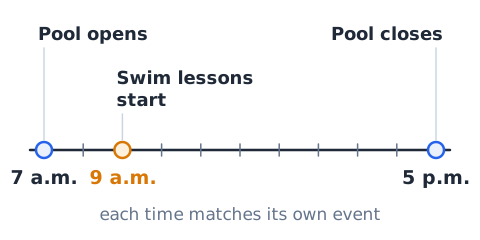
Passages often list several times or dates for different events. A sign might say a pool opens at 7 a.m., swim lessons start at 9 a.m., and the pool closes at 5 p.m. If the question asks when lessons start, 7 a.m. and 5 p.m. are wrong even though they appear in the passage. Match each time to its event, and note words such as before, after, until, and by.
Keep numerical values and units attached
A number only has meaning with its label. If a passage says a tank holds 40 gallons and the truck uses 8 gallons per day, a choice saying the truck uses 40 gallons per day pairs a real number with the wrong item. Check that the number, the unit, and the thing it describes all match. Watch for shifts between per day and per week, or between dollars and percent.
Compare quantities with the stated baseline
Comparisons need a reference point. "Attendance was higher than last year" compares to last year, not to some other event. If a passage says one route is shorter than the highway route, do not assume it is the shortest of all routes. Read carefully to see what is being compared to what.
Sequence words establish order
Words such as first, next, then, before, after, and finally show the order of events. A question asking what happened immediately before a step needs the step just ahead of it, not any earlier step. If a passage says a worker sanded the board, then primed it, then painted it, priming came immediately before painting. Map the order before answering.
Causes, purposes, and outcomes are different details
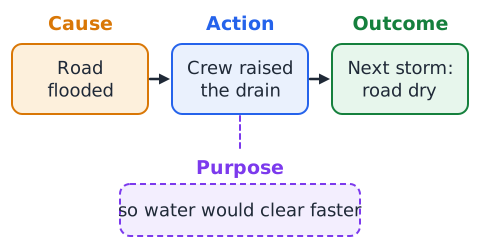
A cause is why something happened, a purpose is what someone intended, and an outcome is what actually resulted. "Because the road flooded, the crew raised the drain so water would clear faster; the next storm left the road dry." Flooding is the cause, faster drainage is the purpose, and the dry road is the outcome. Identify which one the question asks for.
Conditionals: preserve if, when, and unless
Conditional words set the rules for when something happens. "The gate opens if a badge is scanned" means scanning leads to opening. It does not say the gate opens only with a badge, and it does not say that whenever the gate is open, a badge was scanned. "Unless" works differently: "The game continues unless lightning is seen" means lightning stops the game. Keep the condition and its result exactly as stated.
Distinguish some, most, all, and none
Quantity words set how far a claim reaches. Some means at least a few; most means more than half; all means every one; none means zero. If a passage says most of the inspected ladders passed, a choice saying all ladders passed is too strong, and one saying none passed contradicts it. Also note that a statement about inspected items says nothing about items that were never inspected. The right choice keeps the same quantity word or an exact equivalent.
Contrast signals can identify the correct subject
Words such as however, but, whereas, while, and in contrast often separate facts about two different subjects. "The north lot is paved, whereas the south lot is gravel" assigns each surface to a specific lot. When a question asks about one subject, find the side of the contrast that belongs to it. Mixing up the two sides is a common source of wrong answers.
Exceptions matter as much as the general rule
A passage may state a rule and then an exception: "The office closes at 5 p.m., except on Thursdays, when it closes at 7 p.m." If the question asks about Thursday, the exception controls the answer. Words such as except, unless, other than, and only signal exceptions. Always check whether the situation in the question falls under one.
Keep categories and locations distinct
Passages often assign different items to different groups or places. "Paint is stored in Shed A, and fuel is stored in Shed B" puts each item in a specific place. A choice saying fuel is in Shed A swaps categories. When a passage sorts things into groups, build a quick mental list: which item goes where, and which group does what.
Text evidence outranks background knowledge
You may know a lot about a topic, but the question asks what this passage says. If a passage states that a particular bridge was built in 1932 and you remember a different date, the passage controls the answer. Likewise, a choice that is true in general but not stated in the passage is not the right answer to a detail question. Base your choice on the text alone.
Do not confuse stated facts and inferences
A stated fact appears in the passage. An inference is a conclusion you draw from facts. If a passage says the parking lot was full by 8 a.m., stating that the lot was full by 8 a.m. is a fact; saying the event was popular is an inference. Detail questions want facts. If a choice requires a reasoning step the passage did not take, it belongs to a different question type.
Multiple details: require every part to match
Some choices contain two facts joined together, such as a place and a time. Both parts must be correct. If a passage says the meeting is in Room 4 at 2 p.m., a choice saying Room 4 at 3 p.m. is wrong even though half of it matches. Check each part separately and reject the choice if any part fails.
Watch negative wording in questions
Some questions ask which choice is NOT stated, or which statement the passage supports EXCEPT. In these, three choices appear in the passage and the correct answer is the one that does not. It is easy to forget the twist halfway through and pick the first true statement. Slow down, note the negative word, and check each choice against the passage, marking which ones are supported.
The matching-word trap
A wrong choice may repeat exact words from the passage while changing the fact. If the passage says "the crew repaired the north fence on Monday," a choice saying "the north fence was replaced on Monday" shares three key words but changes repaired to replaced. Do not reward a choice for borrowing vocabulary. Check that the meaning matches, not just the words.
The attractive true-but-irrelevant option
Some wrong choices state facts that really are in the passage but do not answer the question. If a question asks why a store closed early and one choice correctly states that the store opened at 9 a.m., that fact is true but irrelevant. A correct detail answer must be both supported by the passage and responsive to the exact question asked.
The overstated-option trap
An overstated choice takes a limited claim and makes it absolute. If a passage says a new valve reduced leaks in most tests, a choice saying the valve eliminated all leaks goes too far. Look for words such as always, never, all, every, and completely, and check whether the passage really supports that strength.
The swapped-order trap
A swapped-order choice gets the events right but puts them in the wrong order. If a passage says crews tested the brakes and then installed new tires, a choice saying the tires were installed before the brake test reverses the sequence. When a question involves order, trace the sequence in the passage before checking choices.
The category-swap trap
A category-swap choice moves a fact from one group to another. If a passage says the day shift handles deliveries and the night shift handles cleaning, a choice saying the night shift handles deliveries swaps them. These choices feel familiar because every word appears in the passage. Confirm which group each fact belongs to.
The false precision trap
Some choices add exactness the passage does not provide. If the passage says repairs would take "about a week," a choice saying "exactly seven days" is more precise than the text allows. Similarly, "up to three hours" is not the same as "three hours." Match the passage's level of precision, including words such as about, at least, and up to.
Scan selectively, then slow down on evidence
For a detail question, you can move quickly through parts of the passage that clearly do not relate to the question. Once you find the sentence with the needed fact, slow down. Read that sentence, and often the one before and after it, word by word. Most detail errors happen in the final comparison, not in the search.
One-sentence proof before selecting
Before choosing, complete this sentence in your head: "The passage says [this], so the answer is [that]." If you cannot fill in the first bracket with actual passage content, you have not found the evidence yet. This habit stops you from picking an answer because it sounds right rather than because the passage supports it.
Timing is practice advice, not a fixed quota
Practice tests may suggest a rough pace per question, but treat it as a guide, not a strict rule. Some passages are shorter or simpler and take less time, while others need a careful second look. Spend the time needed to find evidence on harder questions and save time on easier ones. Check the official testing guidance for actual time limits rather than relying on a memorized per-question number.
CAT-safe answering habit
On the computer-adaptive ASVAB, you generally cannot go back to change an answer after moving on. That makes a confirm-before-clicking habit valuable. Find your evidence, check every part of your chosen answer, glance at the other choices once to be sure none fits better, and then commit. Rushing a choice you could have verified costs more than a few extra seconds.
When two options look correct
When two choices both seem supported, return to the question. Usually one choice answers the exact question while the other answers a slightly different one, adds an unstated fact, or changes a small word. Compare the two choices with each other, find where they differ, and check that specific difference against the passage.
Detail questions may require light synthesis
Sometimes the needed fact is spread across two sentences. "The crew used Truck 9. That truck had just been fitted with a lift gate." To answer whether the crew's truck had a lift gate, you must connect the two sentences. This is still a detail question, since both facts are stated, but you need to link them carefully without adding anything new.
Reasons versus examples in a paragraph
A reason explains why something is true; an example shows a case of it. "The town raised parking fees to fund road repair. For instance, the downtown meters now charge more per hour." Funding road repair is the reason; the downtown meters are an example. If a question asks why fees rose, the example is not the answer, even though it is a real detail.
Signal words for lists and limits
Words such as also, in addition, and another tell you that a list continues. Words such as only, just, and solely limit a claim to a narrow set. If a passage says the course covers knots, rope care, and also basic rigging, there are three topics. If it says only staff may use the lift, everyone else is excluded.
Passage-first versus question-first reading
Some test takers read the passage first and then the question; others glance at the question first to know what to look for. Either can work if you still read enough of the passage to understand the context. The risk with question-first reading is jumping to a matching word without checking its meaning. Practice both and use the approach that gives you more accurate results.
When a number is not the requested detail
Passages often contain several numbers, and test makers place them among the choices. If a passage says a project used 6 workers, cost 2,000 dollars, and took 4 days, a question about duration needs 4 days. The other numbers are real but answer different questions. Match the number to the kind of quantity requested, such as time, cost, count, or distance.
A compact evidence table for difficult passages
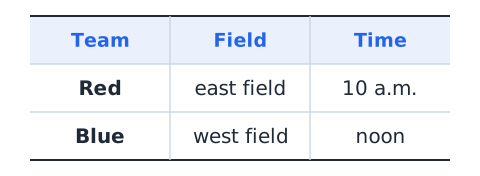
For a dense passage full of names and numbers, build a quick mental or scratch-paper table. List each subject in one column and its facts in the next: who, what, when, where, how many. For example: Team Red, east field, 10 a.m.; Team Blue, west field, noon. With the facts sorted, the swapped choices become easy to spot.
Avoid reverse implication
"If it rains, the event moves indoors" does not mean that whenever the event is indoors, it rained. The event might move indoors for other reasons the passage does not mention. Reversing a conditional creates a claim the passage never made. When a choice switches the order of an if-then statement, check whether the passage actually supports that new direction. Usually it does not.
Evaluate all four answers, not only the first plausible one
It is tempting to pick the first choice that looks right. But a later choice may match the passage more precisely. Read all the options, eliminate those with clear errors, and compare the survivors. On a detail question, the best answer is the one that matches the passage exactly, not merely the first one that is not obviously wrong.
Worked example 01 — A deadline differs from an opening date
Passage: "Registration for the fall boating course opens on August 1. Applications must be received by August 20. Classes begin on September 5."
Question: What is the last day to submit an application?
Choices: A. August 1. B. August 20. C. September 5. D. August 31.
Reasoning: The question asks for a deadline. "Must be received by August 20" states it. August 1 is when registration opens, and September 5 is when classes start. August 31 is not mentioned. Answer: B.
Worked example 02 — A number needs a label
Passage: "A delivery van carries 12 boxes of tile, 5 rolls of carpet, and 3 cans of adhesive."
Question: How many rolls of carpet does the van carry?
Choices: A. 12. B. 3. C. 5. D. 20.
Reasoning: The number attached to rolls of carpet is 5. Twelve belongs to the tile boxes, 3 to the cans, and 20 is the total of all items, which the question did not ask for. Answer: C.
Worked example 03 — Comparison without value swapping
Passage: "The red trail is 4 miles long, while the blue trail is 7 miles long. The blue trail has more shade."
Question: Which statement is supported?
Choices: A. The red trail is 7 miles. B. The blue trail is longer and shadier. C. The red trail is shadier. D. Both trails are 4 miles.
Reasoning: A swaps lengths, C swaps the shade, and D is false. B keeps both facts with the right trail. Answer: B.
Worked example 04 — An exception overrides a routine
Passage: "The recycling truck collects on Mondays. When Monday is a holiday, collection moves to Tuesday."
Question: When will recycling be collected during a week in which Monday is a holiday?
Choices: A. Monday. B. Tuesday. C. Wednesday. D. Collection is skipped.
Reasoning: The routine is Monday, but the exception applies to holiday weeks and moves collection to Tuesday. Nothing says collection is skipped. Answer: B.
Worked example 05 — A reason is not the outcome
Passage: "Because several drivers reported glare, the city installed shades on the traffic lights. Afterward, fewer near-misses were reported at the corner."
Question: Why did the city install shades?
Choices: A. Near-misses decreased. B. Drivers reported glare. C. The lights were broken. D. The corner was rebuilt.
Reasoning: "Because" introduces the reason: glare reports. Fewer near-misses is what happened afterward. C and D are not stated. Answer: B.
Worked example 06 — A paraphrase preserves order
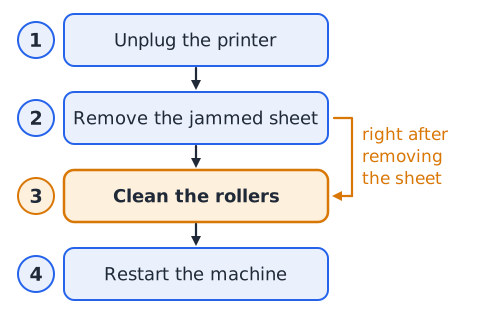
Passage: "The technician unplugged the printer, removed the jammed sheet, and then cleaned the rollers before restarting the machine."
Question: What did the technician do right after removing the jammed sheet?
Choices: A. Unplugged the printer. B. Wiped the rollers clean. C. Restarted the machine. D. Ordered new paper.
Reasoning: The sequence is unplug, remove sheet, clean rollers, restart. "Wiped the rollers clean" rewords the third step. A came before, C came after, and D is not mentioned. Answer: B.
Worked example 07 — A detail is not the main idea
Passage: "The museum added ramps at two entrances, installed an elevator to the second floor, and printed large-type guides. These changes make the building easier for all visitors to use."
Question: According to the passage, where were ramps added?
Choices: A. To the second floor. B. At two entrances. C. In the gift shop. D. The museum became easier to use.
Reasoning: D is the main idea, but the question asks for a location. Ramps were added "at two entrances." Answer: B.
Worked example 08 — Do not reverse the conditional
Passage: "If the water level rises above the red line, the pump starts automatically."
Question: Which statement is supported by the passage?
Choices: A. When the pump is running, the water must be above the red line. B. A rise above the red line starts the pump. C. The pump never runs below the line. D. The pump must be started by hand.
Reasoning: The passage states one direction only: rising water above the line leads to the pump starting. A and C reverse or overextend that rule, since the pump might also run for other reasons. D contradicts "automatically." Answer: B.
Worked example 09 — A pronoun connects sentences
Passage: "The supervisor handed each new hire a laminated card. It listed the radio call signs for every gate."
Question: What listed the radio call signs?
Reasoning: "It" is singular and refers to a thing, so it cannot mean the supervisor or the new hires. Looking back, the nearest fitting noun is the card. Answer: The laminated card.
Worked example 10 — Multiple facts must both survive
Passage: "The training session will be held in Hangar 2 on Thursday at 1 p.m. A makeup session will be held in Hangar 5 on Friday at 9 a.m."
Question: When and where is the main training session?
Choices: A. Hangar 5 on Thursday. B. Hangar 2 on Friday. C. Hangar 2 on Thursday. D. Hangar 5 on Friday.
Reasoning: The main session is Hangar 2 on Thursday. A and B each mix one correct part with one wrong part, and D describes the makeup session. Answer: C.
Trap: topic instead of detail
A choice that describes what the whole passage is about may sound strong, but it does not answer a question about one specific fact. If the question asks how many trucks were repaired, a choice saying the passage is about fleet maintenance is off target. Answer the exact question asked.
Trap: accurate number attached to wrong group
A real number from the passage can be paired with the wrong subject. If 15 nurses and 9 doctors attended, a choice saying 15 doctors attended uses a correct number in the wrong place. Always check which group or item each number belongs to.
Trap: absolute wording from a limited claim
If the passage says "some" or "many," a choice using "all" or "every" overstates it. If the passage says "may" or "can," a choice using "will" or "always" overstates it. Compare the strength of the claim in the choice with the strength in the passage, and reject any choice that pushes it further.
Trap: sequence reversal
A choice can contain the right events in the wrong order. If the passage says the tank was drained before being inspected, a choice saying it was inspected before being drained reverses the sequence. Check order words such as before, after, then, and first.
Trap: assuming a complete list
If a passage names some items, do not assume they are the only ones. "The kit includes a flashlight and a whistle" does not mean the kit holds nothing else. Unless the passage says "only" or gives a complete count, a choice claiming the list is complete goes beyond the text.
Guided drill: identify the exact target
For each question, name the kind of answer it wants.
"When does the shuttle leave the depot?" Target: a time tied to the depot departure.
"Who signed the safety log?" Target: a person, and specifically the one who signed.
"How many spare tires were ordered?" Target: a count of spare tires that were ordered, not delivered or used.
"Why was the drill postponed?" Target: a reason, not what happened afterward.
Guided drill: label the tempting errors
Passage: "The night crew loaded 30 crates. The day crew loaded 22 crates and also swept the dock."
Choice: "The night crew loaded 22 crates." Error: number attached to wrong group.
Choice: "Both crews swept the dock." Error: overstated; only the day crew did.
Choice: "The day crew loaded only 22 crates and did nothing else." Error: contradicts the stated sweeping.
Rapid review: precise detail evidence
A detail answer must be stated or clearly restated in the passage. Read the question as a search instruction, find the sentence that answers it, and compare word by word. Keep agents, numbers, units, times, and categories attached to the right things. Preserve conditions, exceptions, sequence, and quantity words. Accept accurate paraphrase, but reject added precision or overstated claims.
Final checklist before submitting
Before you lock in a detail answer, ask: Does my choice answer the exact question? Can I point to the sentence that proves it? Is every part of the choice correct, including who, when, where, and how many? Did I keep any if, unless, except, or only? Have I read all four choices? If every answer is yes, select it and move on.
 English ▾