ASVAB Camp Get the appGoogle Play
Full ASVAB

Full ASVAB Practice Form 1: All 10 Subtests, Timed

Full ASVAB Practice Form 1 is a complete rehearsal: 135 questions in 197 minutes across all ten subtests. General Science, Arithmetic Reasoning, Word Knowledge, Mathematics Knowledge, Electronics Information, Mechanical Comprehension and Assembling Objects have 15 questions each, while Paragraph Comprehension, Auto Information and Shop Information have 10. The mix is 34 easy, 67 medium and 34 hard.

  • 135 questions
  • 197 minutes
  • 10 subtests
  • Every answer explained
  1. Pick your answers. You can change them until you check.
  2. Check my answers scores the test by subtest and opens every explanation.
0 / 135 answered

General Science

15 questions · 12 min on the real test
Question 1 · GS · easy

A new wildlife bridge lets deer from one forest cross a highway and breed with a separate herd on the other side, bringing alleles that herd did not have. What is this process called?

Show the answer

Answer: D

Correct answer: Gene flow. When individuals migrate and breed in another population, they carry their alleles with them. This movement of alleles between populations is gene flow, and it tends to make neighboring populations more alike.

  • A: Drift is a random change in allele frequencies within a population, not alleles arriving from another population.
  • B: Mutation creates brand-new alleles by changing DNA; here existing alleles are simply moving in.
  • C: Selection depends on a trait affecting survival or reproduction, which the stem does not describe.
  • D (correct): Alleles moving from one population into another through migrating, breeding individuals is gene flow.
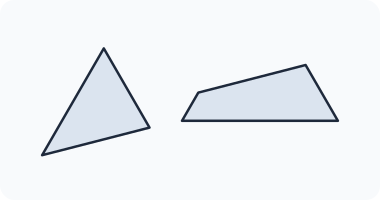
Question 2 · GS · easy

A cook yanks a smooth tablecloth out quickly from under a set of plates, and the plates stay almost exactly where they were. Which idea best explains this?

Show the answer

Answer: B

Correct answer: Inertia, as described by Newton's first law. Newton's first law says an object at rest stays at rest unless a net force acts on it. The cloth moves so quickly that friction acts only briefly, so the plates' inertia keeps them nearly in place.

  • A: The third law describes paired forces between two objects; it does not explain why the plates stay in place.
  • B (correct): The plates tend to stay at rest, and the brief, small friction force from the fast-moving cloth is not enough to change their motion much.
  • C: Air pressure does not explain why the plates resist being moved sideways.
  • D: Gravity on the plates stays the same; it does not change because the cloth is pulled.
Question 3 · GS · easy

A hiker finds a small, heavy, dark stone that scientists confirm fell from space and survived its trip through the atmosphere. What is this object called?

Show the answer

Answer: D

Correct answer: A meteorite. The same body has different names at different stages: a meteoroid in space, a meteor as it glows in the atmosphere, and a meteorite if a piece lands and is found.

  • A: A meteor is the bright streak of light seen in the sky, not the object found on the ground.
  • B: A meteoroid is the name for the body while it is still traveling in space.
  • C: A comet is an icy body orbiting the Sun, not a rock recovered from the ground.
  • D (correct): A fragment from space that survives entry and reaches the ground is a meteorite.
Question 4 · GS · easy

Inside a muscle cell, where does cellular respiration mainly use oxygen to release energy from glucose?

Show the answer

Answer: D

Correct answer: The mitochondria. Breathing moves air, and blood carries oxygen to cells, but the chemical release of energy, cellular respiration, takes place mainly in each cell's mitochondria, producing ATP, carbon dioxide and water.

  • A: The nucleus holds the cell's DNA; it is not where glucose is broken down for energy.
  • B: Alveoli are air sacs in the lungs where gases are exchanged, not structures inside a muscle cell.
  • C: Capillaries deliver oxygen to the cell, but the energy release happens inside the cell itself.
  • D (correct): Mitochondria use oxygen to break down glucose and store the released energy as ATP.
Question 5 · GS · medium

A fallen oak log slowly rots on the forest floor over several years. Which process returns most of the log's carbon to the atmosphere as carbon dioxide?

Show the answer

Answer: D

Correct answer: Cellular respiration by fungi and bacteria. Decomposers such as fungi and bacteria digest the dead wood and use its sugars for energy. Their cellular respiration releases the stored carbon back to the air as carbon dioxide.

  • A: Photosynthesis removes carbon dioxide from the air; it does not release the carbon stored in the log.
  • B: Nitrogen fixation converts nitrogen gas into ammonium and does not involve releasing carbon.
  • C: Transpiration releases water vapor from leaves, not carbon dioxide from dead wood.
  • D (correct): Decomposers break down the wood and release its carbon as carbon dioxide when they respire.
Question 6 · GS · medium

An animal cell has an inherited defect that leaves its lysosomes unable to work. Which problem is most likely to develop in this cell?

Show the answer

Answer: B

Correct answer: Worn-out organelles and engulfed particles build up instead of being broken down. Lysosomes are sacs of digestive enzymes that break down worn-out organelles, food particles and engulfed bacteria so the pieces can be reused. If they fail, that material piles up inside the cell.

  • A: DNA copying happens in the nucleus during interphase and does not depend on lysosomes.
  • B (correct): Lysosomes hold digestive enzymes that break down old cell parts and swallowed material, so without them this debris accumulates.
  • C: ATP is made mainly by mitochondria; lysosomes digest materials rather than release energy.
  • D: Ribosomes link amino acids into proteins; lysosomes break molecules down rather than build them.
Question 7 · GS · medium

A train approaches a crossing with its horn sounding steadily, passes, and moves away. Compared with the horn's actual pitch, what does a person standing at the crossing hear?

Show the answer

Answer: C

Correct answer: A higher pitch while it approaches and a lower pitch as it moves away. This is the Doppler effect. As the train comes closer, each crest is emitted from a slightly closer point, so crests arrive bunched together and the pitch sounds higher. As it moves away the crests spread out and the pitch drops, even though the horn itself never changes.

  • A: This reverses the Doppler effect; waves bunch up in front of an approaching source, raising the pitch.
  • B: Loudness does change, but the received frequency also shifts because the source is moving relative to the listener.
  • C (correct): An approaching source bunches its wave crests, raising the received frequency; a receding source spreads them, lowering it.
  • D: The horn's emitted frequency never changes; only the frequency the listener receives shifts.
Question 8 · GS · medium

Tests on a coastal bay find a pesticide at 0.00005 ppm in the water, 0.04 ppm in zooplankton, 0.5 ppm in small fish, 2 ppm in large predatory fish and 25 ppm in fish-eating terns. Which term best describes this pattern?

Show the answer

Answer: C

Correct answer: Biomagnification. The pesticide concentration rises at every step from water to plankton to fish to birds. An increase in concentration from one trophic level to the next is biomagnification; buildup inside one organism over time would be bioaccumulation.

  • A: Eutrophication is nutrient over-enrichment that feeds algal blooms, not a toxin building up in predators.
  • B: A trophic cascade is a chain of population changes after a predator is gained or lost, not a rise in contaminant levels.
  • C (correct): The concentration climbs with each feeding level because every predator eats many contaminated prey and retains the pesticide.
  • D: Bioaccumulation is buildup within a single organism over its life; this data compares levels across the food chain.
Question 9 · GS · medium

About forty families settle a remote valley and live there in isolation for many generations. One of the founders happened to carry a rare allele, and today that allele is far more common in the valley than in the population the settlers left. No disaster or survival advantage is involved. Which process best explains this?

Show the answer

Answer: B

Correct answer: Founder effect. When a few individuals start a new, isolated population, their alleles, including rare ones, can be overrepresented by chance. This is the founder effect, a form of genetic drift.

  • A: A bottleneck needs a disaster that sharply cuts an existing population, and the stem rules that out.
  • B (correct): A small group starting a new, isolated population can carry rare alleles at a high frequency purely by chance.
  • C: The allele gives no survival advantage, so selection is not what raised its frequency.
  • D: Gene flow needs alleles moving between populations, but this community stayed isolated.
Question 10 · GS · medium

A delivery cyclist rides 3.6 km in 600 s. What is the cyclist's average speed in meters per second?

Show the answer

Answer: D

Correct answer: 6 m/s. First convert distance to meters: 3.6 km = 3,600 m. Then divide by time:

Checking that the units come out as meters per second confirms the division was done the right way.

  • A: This divides 3.6 by 600 without first converting kilometers to meters.
  • B: This divides time by distance, which would give seconds per meter, not meters per second.
  • C: This is ten times too large, a decimal slip when converting 3.6 km to meters.
  • D (correct): Converting 3.6 km to 3,600 m and dividing by 600 s gives 6 m/s.
Question 11 · GS · medium

A worker must push with 220 N before a heavy cabinet starts moving across the floor. Once it is sliding, a 160 N push keeps it moving at a steady speed. What is the kinetic (sliding) friction force on the cabinet?

Show the answer

Answer: A

Correct answer: 160 N. Steady speed in a straight line means balanced forces, so the kinetic friction equals the 160 N push. The 220 N was needed only to overcome the larger maximum static friction and start the cabinet moving.

  • A (correct): At steady speed the net force is zero, so sliding friction exactly matches the 160 N push.
  • B: This is the maximum static friction needed to start the cabinet moving, not the friction while it slides.
  • C: This is the difference between the two pushes, which is not a force acting on the sliding cabinet.
  • D: Adding the two pushes does not describe any single force acting on the cabinet.
Question 12 · GS · hard

After a large earthquake, seismograph stations on the far side of Earth record P waves but no direct S waves. Which conclusion does this observation best support?

Show the answer

Answer: A

Correct answer: Part of Earth's core is liquid. P waves are compressional and can pass through solids and fluids, but S waves are shear waves that cannot travel through liquids.

When direct S waves fail to reach stations across the planet, the best explanation is a liquid layer deep inside Earth, the outer core.

  • A (correct): S waves are shear waves that cannot travel through liquids, so their failure to cross the deep interior points to a liquid outer core.
  • B: The mantle is mostly solid rock that deforms slowly; S waves do travel through it.
  • C: The inner core is solid under immense pressure; the liquid layer is the outer core.
  • D: P waves normally arrive first because they are faster; their speed does not explain missing S waves.
Question 13 · GS · hard

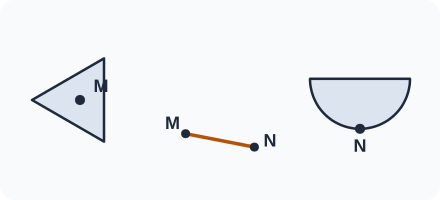
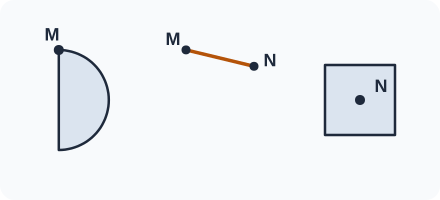
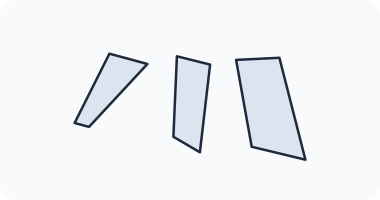
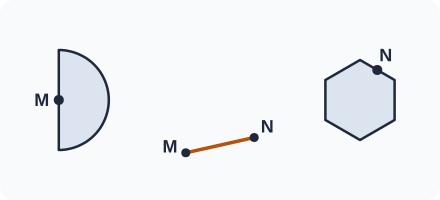
Iron rusts according to

A sample contains 12 iron atoms and 12 oxygen molecules, and they react as far as possible. Which result is correct?

Show the answer

Answer: D

Correct answer: 6 iron oxide units form; 3 oxygen molecules are left over. Divide each amount by its coefficient: iron

12 / 4 = 3

oxygen

12 / 3 = 4

The smaller result, iron, is limiting, so the reaction runs 3 times: 3 x 2 = 6 iron oxide units form and 3 x 3 = 9 oxygen molecules are used, leaving

12 - 9 = 3
  • A: This treats oxygen as limiting (12 divided by 3, times 2), but 12 oxygen molecules are more than the 9 the iron can use.
  • B: This assumes a 1 to 1 ratio and ignores the coefficients 4, 3 and 2.
  • C: The amount of iron oxide is right, but iron uses only 9 of the 12 oxygen molecules, so 3 remain.
  • D (correct): Iron is limiting: 12 iron atoms make 6 iron oxide units and use 9 oxygen molecules, leaving 3.
Question 14 · GS · hard

A particle contains 35 protons, 45 neutrons and 36 electrons. Which description of this particle is correct?

Show the answer

Answer: C

Correct answer: A bromine-80 ion with a −1 charge, in the halogen family. Atomic number 35 is bromine. Mass number =

35 + 45 = 80

and charge = protons − electrons =

35 − 36 = −1

Bromine is a group 17 halogen, which fits gaining one electron to form a −1 ion.

  • A: The charge sign is reversed; with more electrons than protons, the particle is negative.
  • B: Krypton has 36 protons; the element is set by the 35 protons, not by the 36 electrons.
  • C (correct): 35 protons means bromine, 35 + 45 = 80 is the mass number, and 35 − 36 = −1 is the charge.
  • D: This uses the mass number 80 as if it were the atomic number; the atomic number is the proton count, 35.
Question 15 · GS · hard

A lab tests a new antibiotic on dishes of the same bacteria. The dishes with no antibiotic show heavy growth. The dishes with a proven antibiotic also show heavy growth. The dishes with the new antibiotic show heavy growth as well. Which conclusion is best supported?

Show the answer

Answer: A

The proven antibiotic is a positive control: it should stop growth if the method works. Because it failed, the test cannot show an effect even when one exists, so the method must be checked before the new antibiotic can be judged.

  • A (correct): When the positive control fails, the experiment has not shown it can detect an effect, so the new drug's result means little.
  • B: This ignores the failed positive control; if a proven antibiotic did not work either, the setup itself may be at fault.
  • C: Heavy growth without antibiotic is exactly what a negative control should show, so it gives no sign of a problem.
  • D: Both failed equally, which says nothing about the new drug's strength because the test could not detect any effect.

Arithmetic Reasoning

15 questions · 55 min on the real test
Question 16 · AR · easy

Two search teams leave a base camp at the same time and walk in opposite directions, one at 2.5 mph and the other at 3.5 mph. How far apart are they after 4 hours?

Show the answer

Answer: B

Correct answer: 24 miles. Moving apart, they separate at

2.5 + 3.5 = 6 miles

per hour. After 4 hours they are

6 × 4 = 24 miles

apart.

  • A: This subtracts the speeds, which is the rule for a chase, not for opposite directions.
  • B (correct): They separate at 6 mph, and 6 × 4 = 24 miles.
  • C: This counts only the faster team's distance, 3.5 × 4.
  • D: This finds the combined speed but forgets to multiply by the 4 hours.
Question 17 · AR · easy

A security guard's shift starts at 10:45 p.m. and ends at 7:15 a.m. the next morning. How long is the shift?

Show the answer

Answer: A

Correct answer: 8 hours 30 minutes. Split at midnight. From 10:45 p.m. to 12:00 midnight is 1 hour 15 minutes.

From midnight to 7:15 a.m. is 7 hours 15 minutes. Total: 8 hours 30 minutes.

  • A (correct): From 10:45 p.m. to midnight is 1 hour 15 minutes, and midnight to 7:15 a.m. is 7 hours 15 minutes, for 8 hours 30 minutes.
  • B: This subtracts 7:15 from 10:45 as if both times were on the same half of the day.
  • C: This counts one hour too many when crossing midnight.
  • D: This counts one hour too few, as if the stretch from 10:45 p.m. to midnight were only 15 minutes.
Question 18 · AR · easy

A supply truck uses 18 gallons of diesel to travel 306 miles. How many miles does it travel per gallon?

Show the answer

Answer: B

Correct answer: 17 miles per gallon. A unit rate is the first quantity divided by the second: 306 miles ÷ 18 gallons = 17 miles per gallon. Check:

17 × 18 = 306
  • A: This comes from a division slip; 15 × 18 is only 270 miles.
  • B (correct): Dividing miles by gallons gives 306 ÷ 18 = 17 miles per gallon.
  • C: This comes from a division slip; 19 × 18 is 342 miles, more than the trip.
  • D: This subtracts 18 from 306 instead of dividing.
Question 19 · AR · easy

A cook has 95 eggs and packs them into cartons that hold 12 eggs each. She fills each carton completely before starting the next. How many eggs are in the last, partly filled carton?

Show the answer

Answer: B

Correct answer: 11 eggs. Divide: 95 ÷ 12 is 7 remainder 11, because

12 × 7 = 84
and
95 − 84 = 11

The question asks for the leftover amount, so the last carton holds 11 eggs.

  • A: 7 is the number of full cartons, not the number of leftover eggs.
  • B (correct): 12 × 7 = 84, and 95 − 84 = 11 eggs are left for the last carton.
  • C: 8 is the total number of cartons used, not the number of eggs in the last one.
  • D: 12 is what a full carton holds; the last carton is only partly filled, so it holds fewer.
Question 20 · AR · medium

A contractor pays 10 laborers $12 per hour, 15 laborers $14 per hour, and 25 laborers $16 per hour. What is the average hourly wage of the 50 laborers?

Show the answer

Answer: B

Correct answer: $14.60. Group totals:

and
dollars

for $730.

Average wage: $730 divided by 50 is $14.60 per hour.

  • A: $14.00 averages the three wage rates without weighting by how many laborers earn each.
  • B (correct): The hourly totals are $120 + $210 + $400 = $730, and $730 divided by 50 is $14.60.
  • C: This divides the $730 total by the 3 wage groups instead of by the 50 laborers.
  • D: This pairs the 25 laborers with $12 and the 10 laborers with $16, reversing the weights.
Question 21 · AR · medium

A harbor patrol boat covers 39 miles in 1 hour 12 minutes. What is the boat's average speed?

Show the answer

Answer: D

Correct answer: 32.5 mph. Write the time in hours: 12 minutes is

12/60 = 0.2 hour

so the time is 1.2 hours. Then speed = distance ÷ time =

39 ÷ 1.2 = 32.5 mph
  • A: This writes 1 hour 12 minutes as 1.12 hours instead of converting the minutes to 0.2 hour.
  • B: This multiplies the distance by the time instead of dividing.
  • C: This ignores the extra 12 minutes and divides by 1 hour.
  • D (correct): With the time written as 1.2 hours, 39 ÷ 1.2 = 32.5 mph.
Question 22 · AR · medium

A roll holds 10 yards of ribbon. Each bow uses yard. How many complete bows can be made from the roll?

Show the answer

Answer: A

Correct answer: 13 bows. "How many fit" means divide:

The 1/3 of a bow cannot be finished, so 13 complete bows can be made.

  • A (correct): 10 divided by 3/4 is 40/3 = 13 1/3, and only 13 bows can be finished.
  • B: This rounds 13 1/3 up, but there is not enough ribbon left for a 14th bow.
  • C: This is the exact quotient, but the question asks for complete bows.
  • D: This multiplies 10 by 3/4; finding how many pieces fit calls for division.
Question 23 · AR · medium

A conveyor belt at a warehouse moves 18 boxes per minute. How many boxes does it move in 2 hours 20 minutes?

Show the answer

Answer: B

Correct answer: 2,520 boxes. The rate is per minute, so convert the time to minutes:

minutes

Total:

boxes.

  • A: This multiplies the per-minute rate by about 2.33 hours, mixing hours with a per-minute rate.
  • B (correct): 2 hours 20 minutes is 140 minutes, and 18 times 140 is 2,520.
  • C: This writes 2 hours 20 minutes as 2.2 hours, or 132 minutes, instead of 140 minutes.
  • D: This counts only the 2 full hours and leaves out the last 20 minutes.
Question 24 · AR · medium

Three tractors can each plow a field alone in 6 hours, 9 hours and 18 hours. If all three tractors plow the field at the same time, how long will the job take?

Show the answer

Answer: B

Correct answer: 3 hours. Rewrite each rate with denominator 18:

The tractors plow 1/3 of the field per hour, so they need 3 hours.

  • A: This divides the fastest time by 3, which would require all three tractors to be as fast as the fastest one.
  • B (correct): Over a common denominator of 18 the rates add to 6/18 = 1/3 of the field per hour, so the job takes 3 hours.
  • C: This averages the three times; the team must be faster than any single tractor.
  • D: This adds the three times instead of adding the three rates.
Question 25 · AR · medium

A runner's three lap times are 62.4 seconds, 61.85 seconds, and 63.1 seconds. What is the average lap time?

Show the answer

Answer: D

Correct answer: 62.45 seconds. Add with the points lined up:

seconds

Divide by the number of laps:

seconds

The average must fall between the fastest and slowest laps, and it does.

  • A: This is the total of the three laps; the average requires dividing the total by 3.
  • B: This comes from a misaligned addition that gives a total of 187.05 instead of 187.35.
  • C: This divides the total by 4 instead of by the 3 laps that were run.
  • D (correct): The sum is 187.35 seconds, and 187.35 divided by 3 is 62.45.
Question 26 · AR · medium

Which list shows 2/3, 5/8 and 7/12 in order from least to greatest?

Show the answer

Answer: C

Correct answer: 7/12, 5/8, 2/3. Rename all three over the common denominator 24.

Ordering the numerators 14, 15, 16 gives 7/12, 5/8, 2/3.

  • A: This is the correct order reversed, greatest to least, which happens when the larger denominator is assumed to mean the larger fraction.
  • B: This puts 5/8 below 7/12, but 5/8 is 15/24 while 7/12 is only 14/24.
  • C (correct): In twenty-fourths the fractions are 16/24, 15/24 and 14/24, so 7/12 is smallest and 2/3 is largest.
  • D: This places 2/3 below 5/8, but 2/3 is 16/24 and 5/8 is 15/24.
Question 27 · AR · hard

A winter coat is priced at $180. It is marked 30% off, and at the register an extra 15% is taken off the sale price. Sales tax of 7% is then added. What is the total cost, to the nearest cent?

Show the answer

Answer: C

Correct answer: $114.60. Apply each step to the current amount, in order.

The total cost is $114.60.

  • A: This adds the two discounts into a single 45% discount; the second discount applies to the reduced price, not the original.
  • B: This is the price after both discounts, but the 7% sales tax was never added.
  • C (correct): 180 × 0.70 = $126, then 126 × 0.85 = $107.10, then 107.10 × 1.07 ≈ $114.60.
  • D: This combines 30% + 15% − 7% into one 38% discount; each percent must be applied to the current amount in turn.
Question 28 · AR · hard

A sales associate earns a commission of 4 percent on the first $10,000 of monthly sales and 6 percent on all sales above $10,000. How much commission does she earn on $16,500 in sales?

Show the answer

Answer: B

Correct answer: $790. Split the sales: the first $10,000 earns

dollars

The remaining 16,500 minus 10,000, or $6,500, earns

dollars

Total commission: 400 plus 390 is $790.

  • A: This applies the 6 percent rate to all $16,500, but only sales above $10,000 earn 6 percent.
  • B (correct): 4 percent of 10,000 is 400, 6 percent of the remaining 6,500 is 390, and together they make 790.
  • C: This applies the 4 percent rate to all $16,500 and ignores the higher rate above $10,000.
  • D: This takes 6 percent of the full $16,500 in addition to 4 percent of the first $10,000, counting $10,000 of sales twice.
Question 29 · AR · hard

A bus travels at 55 miles per hour for 2 hours 24 minutes, then at 40 miles per hour for 1 hour 36 minutes. What total distance does the bus travel?

Show the answer

Answer: B

Correct answer: 196 miles. Convert minutes: 24 minutes is

hour

and 36 minutes is

hour

First leg:

miles

Second leg:

miles

Total:

miles
  • A: This reads the times as 2.24 and 1.36 hours, treating minutes as hundredths of an hour.
  • B (correct): The legs are 2.4 hours and 1.6 hours, so the distance is 55 x 2.4 + 40 x 1.6 = 132 + 64 = 196 miles.
  • C: This averages the two speeds to 47.5 mph over 4 hours, but the bus spent more time at the faster speed.
  • D: This is only the first leg of the trip, an in-between total.
Question 30 · AR · hard

A 64-gallon water tank on a ranch is 3/8 full. How many gallons must be added to make the tank 0.9 full?

Show the answer

Answer: C

Correct answer: 33.6 gallons. Convert the fraction:

The tank must rise by

of its capacity.

Gallons to add:

Check: the tank holds 24 gallons now and needs

gallons
and
  • A: This is 0.9 of the tank; it ignores the water already in it.
  • B: This is the amount already in the tank (3/8 of 64), not the amount to add.
  • C (correct): The tank must go from 0.375 full to 0.9 full, an increase of 0.525 of 64 gallons, which is 33.6.
  • D: This rounds 3/8 to 0.38 too early; using the exact 0.375 gives a different result.

Word Knowledge

15 questions · 9 min on the real test
Question 31 · WK · easy

When the rookie dropped the easy fly ball, a few fans in the bleachers let out DERISIVE whistles and jeers.

DERISIVE most nearly means:

Show the answer

Answer: D

Correct answer: mocking. Derisive sits at the far end of the criticism scale: skeptical doubts, disdainful looks down, and derisive openly mocks. Mocking is the only choice that includes that ridicule.

  • A: Doubtful matches skeptical, which only asks for proof; derisive goes much further and adds ridicule.
  • B: Decisive only looks similar; it means able to make firm decisions quickly.
  • C: Respectful is the opposite of derisive.
  • D (correct): Derisive describes open ridicule, such as laughing at or making fun of someone or something.
Question 32 · WK · easy

All visitors must COMPLY with the base's security rules before they are allowed past the gate.

COMPLY most nearly means:

Show the answer

Answer: D

Correct answer: obey. Rules that must be met before entry are rules to follow. COMPLY means to do what is required, so obey is the synonym; complain and complete only share letters.

  • A: Complain shares the comp- start but means to express dissatisfaction.
  • B: Ignore is the opposite of following the rules.
  • C: Complete is a look-alike that means to finish.
  • D (correct): Obey matches comply: to follow a rule, order or request.
Question 33 · WK · easy

A CYCLIST pedaled past the gate every morning on her way to work.

In this sentence, CYCLIST most nearly means:

Show the answer

Answer: D

Correct answer: bicycle rider. The -ist ending names a person who practices or does something. Cycle plus -ist is a person who cycles, so a cyclist is a bicycle rider.

  • A: This names the machine, not the person who rides it.
  • B: Cycling names the activity, not a person.
  • C: A shop is a place; -ist names a person.
  • D (correct): The ending -ist names a person who does something, so a cyclist is a person who rides a bicycle.
Question 34 · WK · easy

Military police will ENFORCE the new speed limit on base starting Monday.

ENFORCE most nearly means:

Show the answer

Answer: B

Correct answer: make people obey. Enforce means to make sure a rule or law is obeyed. The police will apply the speed limit and see that drivers follow it, so the answer is make people obey.

  • A: Ignore means pay no attention to, the opposite of enforcing a rule.
  • B (correct): To enforce a rule is to make sure people follow it, which is what police do with a speed limit.
  • C: Proposing a rule for a vote suggests an idea; the limit already exists and police are applying it.
  • D: Repeal means cancel a rule, the reverse of making people obey it.
Question 35 · WK · medium

The United States, Canada and Mexico signed a TRILATERAL agreement on cross-border trucking rules. TRILATERAL most nearly means?

Show the answer

Answer: B

Correct answer: Involving three parties. Tri- means three, and lateral means having to do with sides. An agreement among three countries is trilateral, involving three parties.

  • A: Involving two parties is the meaning of bilateral; bi- means two.
  • B (correct): Tri- means three, and lateral means side, so a trilateral agreement has three sides, here three countries.
  • C: Involving many parties would call for multi-, the wrong number for three nations.
  • D: Made in secret adds an idea that neither the prefix nor the sentence supports.
Question 36 · WK · medium

The new recruit was hardly LETHARGIC; he finished his chores early and then asked for more work.

In this sentence, LETHARGIC most nearly means:

Show the answer

Answer: D

Correct answer: sluggish. "Hardly" negates LETHARGIC, and the recruit was full of energy. So LETHARGIC names the opposite of that energy: sluggish.

  • A: This describes the recruit as he actually was; "hardly" means the word is the opposite.
  • B: Being on time is related to finishing early, but the word is contrasted with energy and eagerness, not timing.
  • C: Manners are not mentioned, so this adds a fact the sentence does not support.
  • D (correct): Removing "hardly" shows the word is the opposite of the eager recruit: slow and lacking energy.
Question 37 · WK · medium

The academy invited a DISTINGUISHED retired general, honored for forty years of service, to speak at graduation.

DISTINGUISHED most nearly means:

Show the answer

Answer: A

Correct answer: eminent. Distinguished describes a person, and the clue about honors and long service points to respect. Eminent fits. Distinctive (characteristic) and distinctly (clearly) share the root but mean different things.

  • A (correct): Eminent means highly respected and well known, which fits a general honored for forty years of service.
  • B: Characteristic is the meaning of distinctive, a different family member that describes an easily recognized feature.
  • C: This matches distinctly, the adverb meaning clearly, not a word that describes a respected person.
  • D: Unknown is the opposite of a general who has been publicly honored.
Question 38 · WK · medium

Applicants for the interpreter job must have a strong COMMAND of Korean.

As used in this sentence, COMMAND most nearly means:

Show the answer

Answer: C

Correct answer: mastery. The partners "strong" and "of Korean" in a job requirement describe skill. COMMAND here means mastery.

  • A: A command can be an order, but you cannot have a strong order of a language.
  • B: A command can be a military unit, which does not fit an interpreter's language skill.
  • C (correct): A strong command of a language is a high level of skill, so mastery fits.
  • D: Interest in Korean would not qualify someone to interpret; the job needs skill.
Question 39 · WK · medium

The sergeant was DUBIOUS about the private's claim that the radio had fixed itself overnight.

DUBIOUS most nearly means:

Show the answer

Answer: C

Correct answer: doubtful. A radio that supposedly fixed itself is an unlikely claim, so the sergeant would question it. DUBIOUS means feeling doubt or uncertainty; substituting doubtful keeps the sentence's meaning.

  • A: Anger is a stronger, different reaction; the sentence only shows she questioned the claim.
  • B: Convinced is the opposite of doubting the story.
  • C (correct): Doubtful fits: a radio fixing itself is hard to believe, so the sergeant did not accept the claim.
  • D: She might find the story funny, but that is an invented reaction, not the meaning of the word.
Question 40 · WK · medium

FEEBLE most nearly means:

Show the answer

Answer: A

Correct answer: weak. Feeble means weak, whether in body (a feeble grip) or in effect (a feeble attempt). Elderly is only a related idea that often comes to mind, not a synonym.

  • A (correct): Feeble means lacking strength or force, as in a feeble voice or a feeble excuse.
  • B: Older people are sometimes feeble, but age is an association, not the meaning; a sick child can also be feeble.
  • C: Shy describes timid social behavior, not a lack of strength.
  • D: Cheap describes low cost or low quality, not physical weakness.
Question 41 · WK · medium

Safety glasses protect workers from any PROJECTILE that comes off the grinding wheel.

PROJECTILE most nearly means:

Show the answer

Answer: D

Correct answer: object sent flying. Pro means forward and ject means throw. A projectile is an object thrown or flung forward, like a chip of metal flying off a grinding wheel.

  • A: A grinding wheel can have sharp edges, but glasses guard against things flying toward the eyes.
  • B: Noise is handled by ear protection; ject, throw, points to a flying object.
  • C: Heat would need the therm root, and safety glasses are not mainly for heat.
  • D (correct): Pro means forward and ject means throw, so a projectile is an object thrown or shot forward through the air.
Question 42 · WK · hard

The retired engineer's PHILANTHROPY paid for scholarships for dozens of local students.

PHILANTHROPY most nearly means:

Show the answer

Answer: B

Correct answer: generous giving to help others. Philanthropy literally means love of humankind, but its modern meaning is giving to help others. Paying for students' scholarships is a clear example of that generosity.

  • A: This is anthropology; it shares anthrop but ends in -logy, study.
  • B (correct): Phil means love and anthrop means humankind, and in modern use that love shows up as giving money or time to help people, as the scholarships show.
  • C: Phil does mean love, but anthrop points to people, not knowledge, and paying for scholarships is an act of giving.
  • D: Saving keeps money; the engineer gave money away, which is the opposite action.
Question 43 · WK · hard

The league SANCTIONED the club for using an ineligible player, fining it $50,000.

As used in this sentence, SANCTIONED most nearly means:

Show the answer

Answer: B

Correct answer: penalized. SANCTIONED has two nearly opposite senses, approve and punish. The clues "for using an ineligible player" and "fining it $50,000" select the punishment sense: penalized.

  • A: Sanction can also mean to approve officially, but the fine and "for using an ineligible player" show punishment.
  • B (correct): A fine for breaking a rule is a penalty, so "penalized the club" fits.
  • C: Sponsoring means backing with money, the reverse of taking $50,000 from the club.
  • D: An investigation might come first, but fining the club shows the league acted, not just looked into it.
Question 44 · WK · hard

Like most vehicles, a new pickup truck begins to DEPRECIATE as soon as it is driven off the dealer's lot. DEPRECIATE most nearly means?

Show the answer

Answer: A

Correct answer: Lose value. De- often means reduce or move down, as in devalue, and the base preci- comes from price. A truck that loses worth once it is driven off the lot depreciates, so the answer is lose value.

  • A (correct): De- means reduce or move down, and the base comes from price, so to depreciate is to lose value.
  • B: Gain value is the meaning of appreciate; the de- prefix points downward.
  • C: Go out of style guesses from the idea of age, but the base is price, not fashion.
  • D: Become paid off is about the loan, not the truck's worth.
Question 45 · WK · hard

Because the budget figures were still incomplete, the committee voted to TABLE the proposal until next month's meeting.

In this sentence, TABLE most nearly means:

Show the answer

Answer: C

Correct answer: postpone. Do not trust a remembered meaning: the sentence controls the sense. Incomplete figures are a reason to wait, and "until next month's meeting" shows a delay, so TABLE means postpone.

  • A: Approval would settle the matter now; the sentence says it waits until next month.
  • B: A rejected proposal would not come back at next month's meeting.
  • C (correct): Incomplete figures and a delay until next month show the proposal was put off for later.
  • D: In some uses table means bring forward for discussion, but here the proposal is held over to a later meeting.

Paragraph Comprehension

10 questions · 27 min on the real test
Question 46 · PC · easy

Aboard the training ship Resolute, safety gear is kept in assigned places so that any crew member can find it in the dark. Life jackets are stored in the red lockers on the main deck. Fire hoses hang in the blue cabinets along the lower passageway. Spare flashlights and batteries are kept in the gray bins beside the galley door. First-aid kits are mounted on the wall of the bridge and in the engine room.

According to the passage, where are spare flashlights kept?

Show the answer

Answer: C

Correct answer: In gray bins next to the galley door. Build a quick list: life jackets in red lockers, fire hoses in blue cabinets, flashlights and batteries in gray bins by the galley, first-aid kits on the bridge and in the engine room. The flashlight entry gives the answer.

  • A: The red lockers hold life jackets, so this swaps one category of gear for another.
  • B: The blue cabinets hold fire hoses, not flashlights.
  • C (correct): The passage assigns spare flashlights and batteries to the gray bins beside the galley door.
  • D: The bridge wall holds a first-aid kit, not the spare flashlights.
Question 47 · PC · easy

The regional sales team was on fire last quarter. Its six members closed twice as many contracts as they had a year earlier and brought in three new corporate clients. The company rewarded them with a team dinner and a bonus, and the regional manager asked the group to share its methods with the other offices at next month's planning meeting in Denver.

What does the phrase on fire mean in the passage?

Show the answer

Answer: A

Correct answer: performing extremely well. Literal language would mean an actual fire, but the evidence points to success: twice as many contracts, three new clients and a bonus. On fire is figurative here and means performing extremely well.

  • A (correct): Doubled contracts, new clients and a reward show the team was doing outstanding work.
  • B: This is the literal meaning; nothing in the passage mentions flames or danger.
  • C: The team was rewarded for its results, and nothing suggests anger.
  • D: The passage reports success and a celebration, not burnout.
Question 48 · PC · medium

The new handheld radios issued to the security team offer several improvements. First, they are sealed against rain and dust, so they keep working during outdoor patrols in bad weather. Second, a single charge now lasts a full twelve-hour shift. Third, each radio has an emergency button that sends the user's location to the dispatch desk. Supervisors say these features should make long night patrols safer.

Which best describes the list that begins with the word "First"?

Show the answer

Answer: C

Correct answer: It lists features of the radios, not events in the order they happened. The items after first, second and third are features of the radios, not stages in time. The numbering ranks or counts improvements; nothing in the list says one event happened before another.

  • A: The items are features, not instructions; none of them tells the user what to do in sequence.
  • B: The word first is tempting, but the list contains no dates or stages of development.
  • C (correct): Weather sealing, battery life and an emergency button are qualities of the radios, so the list is not chronological.
  • D: The passage never says why the radios were bought; it lists what they can do.
Question 49 · PC · medium

The laundry room in Building 12 has six washers and six dryers. On Monday, a maintenance notice was taped to the door: four of the dryers are out of service until a replacement part arrives, which the supplier says should take about two weeks. The washers are working normally. Residents have been asked to run only one load at a time and to remove their clothes promptly when a cycle ends.

Which inference is best supported by the passage?

Show the answer

Answer: B

Correct answer: Residents may have to wait longer than usual to use a dryer. Link the facts: four of six dryers are down, so only two remain, and residents are asked to limit loads and clear machines quickly. The smallest inference is that dryer use will be slower or more crowded; nothing supports a cause, an exact repair date, or a washer outage.

  • A: The passage never says why the dryers failed, so this adds a cause that is not in the text.
  • B (correct): With only two of six dryers working and residents asked to move clothes promptly, longer waits are the smallest reasonable step beyond the facts.
  • C: The supplier says the part should take about two weeks; this turns an estimate into a guaranteed date.
  • D: The passage states the washers are working normally, so this contradicts the text.
Question 50 · PC · medium

The Harbor City Port Authority is hiring seasonal crane operators. Every applicant must hold a current crane operator certification. In addition, applicants must show either two years of paid crane experience or completion of the port's twelve-week apprentice program. Applicants who speak a second language are encouraged to apply, but this is not required. Interviews will be held at the main terminal during the first week of April.

Which applicant meets all of the stated requirements?

Show the answer

Answer: B

Correct answer: Ortiz, with a current certification and a completed apprentice program but no paid experience. Treat the rule as an AND joined to an OR: a current certification AND (two years of experience OR the apprentice program). Check each applicant against both parts. Only Ortiz has the certification and one of the two accepted paths.

  • A: Lee's experience is enough for the second requirement, but a current certification is required of everyone, and his has expired.
  • B (correct): Ortiz has the required current certification and meets the either-or requirement through the apprentice program, which is enough without paid experience.
  • C: Grant satisfies the either-or requirement twice over but lacks the certification that every applicant must have.
  • D: Baker has the certification, but one year of experience falls short and he has not completed the apprentice program; the second language is not required.
Question 51 · PC · medium

Westbrook Regional Airport now handles about 1,200 passengers on a typical weekday. Last year it added a second security checkpoint, and this year it opened a new parking garage with 500 spaces. According to an airport spokesperson, the garage is usually about two-thirds full by noon on weekdays, and short-term parking near the terminal often fills before 9 a.m.

Which conclusion is best supported by the passage?

Show the answer

Answer: D

Correct answer: On a typical weekday, more than half of the garage's spaces are taken by noon. Two-thirds of 500 is about 333, which is more than 250, or half of the spaces, so the garage is more than half full by noon. A claim about growth needs a baseline, and the passage gives only today's passenger count. The other choices invent an effect or mix up passengers with cars.

  • A: The passage gives only the current passenger count and no earlier figure, so it offers no baseline for growth.
  • B: Wait times are never mentioned, so this supplies an effect the passage does not report.
  • C: The 1,200 figure counts passengers, not cars, and the garage holds only 500 spaces.
  • D (correct): Two-thirds of 500 spaces is about 333 spaces, which is more than half of the garage.
Question 52 · PC · medium

The new parts depot at Camp Halsey sits directly across the road from the vehicle maintenance bay, only about 200 yards away. Even so, mechanics say that getting a single part from the depot usually takes most of an hour. The depot has two clerks on duty, and every request must be typed into the supply computer and then approved by the depot supervisor before the part can be released.

Which statement is best supported by the passage?

Show the answer

Answer: A

The words "even so" mark a contrast: the depot is close, yet a part takes nearly an hour. That contrast implies something other than distance slows the process, and the passage points to the computer entry and supervisor approval. The best answer stays general and adds no motives or numbers.

  • A (correct): The short distance contrasts with the long wait, and the passage describes a two-step paperwork process that could slow each request.
  • B: The passage stresses that the depot is only about 200 yards away, so distance is the one cause the contrast rules out.
  • C: Nothing describes how the clerks work, so this blames them with no evidence.
  • D: This predicts an exact result that the passage never discusses.
Question 53 · PC · medium

Electric vehicles made up about one in ten new cars sold in the region last year, and state planners expect that share to roughly double within five years. The Millbrook rest stop on Interstate 70, which has four fast chargers, already sees drivers waiting twenty minutes or more on holiday weekends. If sales follow the forecast, those waits will likely grow longer and start to appear on ordinary weekends as well, especially during summer travel.

Which statement best describes what the author does in this passage?

Show the answer

Answer: B

Correct answer: Predicts that charging waits will grow, without recommending a solution. Watch the verbs. Should and ought recommend, while will, likely and expect predict. Every forward-looking statement here uses prediction language, and no sentence calls for action, so the author forecasts longer waits without recommending anything.

  • A: No should, must or ought appears; the passage describes a likely future but stops short of proposing a fix.
  • B (correct): Words like expect, will likely and if sales follow the forecast signal prediction, and the passage never says what anyone should do.
  • C: The author makes no judgment about electric vehicles; the waits are presented as a forecast, not as proof of a flaw.
  • D: No approval or decision is mentioned anywhere, so this adds a fact the passage does not contain.
Question 54 · PC · hard

A bakery that supplies several school cafeterias runs two shifts. Last Tuesday, the night shift baked 450 loaves of bread and the day shift baked 600. Each shift had the same number of workers and used the same ovens. The owner posted the totals on the break-room board and said she would like both shifts to reach 650 loaves by spring.

Which statement correctly compares the two shifts' output?

Show the answer

Answer: B

Correct answer: The day shift baked one third more loaves than the night shift. The difference is

600 - 450 = 150

loaves. Measured against the night shift, 150/450 is one third, so the day shift baked one third more. Measured against the day shift, 150/600 is one quarter, so the night shift baked 25 percent fewer, not one third fewer.

  • A: When the day shift's 600 is the base, 150 is one quarter of it, so the night shift baked 25 percent fewer, not one third fewer.
  • B (correct): The day shift's extra 150 loaves divided by the night shift's 450 equals one third.
  • C: This divides the 150-loaf gap by 600, the wrong base; compared with the night shift's 450 loaves, the gain is one third.
  • D: The gap of 150 is correct, but the subjects are swapped; the day shift baked more.
Question 55 · PC · hard

Barnacles and other sea life that grow on a ship's hull add drag and force the engines to burn more fuel. Engineers tested a slick silicone hull coating designed to keep these organisms from gripping the surface. On cargo ships that sailed steadily between ports, the coating stayed largely clean, because water rushing past the hull washed loose most of the young growth before it could attach firmly. On ships that sat at anchor for weeks at a time, however, barnacles built up on the coated hulls nearly as heavily as on standard painted hulls.

Which statement best expresses the main idea of the passage?

Show the answer

Answer: B

Correct answer: The silicone coating limited hull growth mainly on ships that moved often. Use the two-sentence audit: the correct main idea must cover both the result for moving ships and the result for anchored ships. The coating helped when water flowed past the hull but not when ships sat still, so the best answer limits the benefit to ships that move often.

  • A: This fits the sentences about moving ships but leaves the sentence about anchored ships stranded, so it claims too much.
  • B (correct): This covers both halves of the finding: the coating worked on ships in steady motion but did little for ships that sat at anchor.
  • C: This reverses the passage's finding for cargo ships that sailed steadily, where the coating stayed largely clean.
  • D: This is background from the first sentence explaining why the test mattered, not the result of the test.

Mathematics Knowledge

15 questions · 31 min on the real test
Question 56 · MK · easy

A quartermaster wants to load crates onto 3 trucks equally. Which crate count can be shared among the 3 trucks with none left over?

Show the answer

Answer: D

Correct answer: 7,203. Add the digits: if the sum is a multiple of 3, the number is too. Only 7,203 has a digit sum (12) divisible by 3.

  • A: Its digit sum is 16, which is not a multiple of 3.
  • B: Its digit sum is 7, which is not a multiple of 3.
  • C: Its digit sum is 7, which is not a multiple of 3.
  • D (correct): Its digits add to 7 + 2 + 0 + 3 = 12, a multiple of 3, and 7,203 ÷ 3 = 2,401.
Question 57 · MK · easy

A countdown pattern reads 31, 26, 21, 16, and so on. Which number comes next?

Show the answer

Answer: D

Correct answer: 11. Each term is 5 less than the one before, so the common difference is −5. The next term is

16 − 5 = 11
  • A: This adds 5 instead of subtracting it; the terms are falling.
  • B: This skips ahead two steps, 16 − 10, instead of one.
  • C: This subtracts 4 instead of the actual difference of 5.
  • D (correct): Subtracting the common difference of 5 from 16 gives 11.
Question 58 · MK · easy

A triangular sign has sides of 2 feet, 18 inches and 30 inches. What is its perimeter in inches?

Show the answer

Answer: D

Correct answer: 72 inches. Convert to one unit first: 2 feet = 24 inches. The perimeter is

24 + 18 + 30 = 72 inches
  • A: This adds 2 + 18 + 30 without converting the 2 feet to inches.
  • B: This counts 2 feet as 20 inches; a foot is 12 inches, not 10.
  • C: The perimeter is 6 feet, not 6 inches.
  • D (correct): 2 feet is 24 inches, and 24 + 18 + 30 = 72 inches.
Question 59 · MK · easy

An inscribed angle in a circle cuts off an arc of 110 degrees. What is the measure of the inscribed angle?

Show the answer

Answer: B

Correct answer: 55 degrees. An inscribed angle is half of its intercepted arc:

110 / 2 = 55 degrees
  • A: This is the measure a central angle on the same arc would have; inscribed angles are half as large.
  • B (correct): An inscribed angle is half its arc, and half of 110 is 55.
  • C: This doubles the arc instead of halving it.
  • D: This subtracts the arc from 180; the inscribed angle is simply half its arc.
Question 60 · MK · medium

A checking account is overdrawn, with a balance of −$35. The owner deposits $120 and then writes a check for $48. What is the new balance?

Show the answer

Answer: B

Correct answer: $37. Write deposits as positive and withdrawals as negative: −35 + 120 + (−48).

−35 + 120 = 85
and
85 − 48 = 37

so the balance is $37.

  • A: This treats the starting balance as +$35 instead of −$35.
  • B (correct): −35 + 120 − 48 = 85 − 48 = 37 dollars.
  • C: This adds the $48 check instead of subtracting it.
  • D: The size is right, but −35 + 120 = 85 is positive, so the final balance is positive.
Question 61 · MK · medium

Two pumps together move 900 gallons of water per hour. Pump A moves twice as many gallons per hour as Pump B. How many gallons per hour does Pump A move?

Show the answer

Answer: B

Correct answer: 600 gallons per hour. Write

a + b = 900

and a = 2b. Substitute:

2b + b = 900

so 3b = 900 and b = 300. Then

a = 2(300) = 600 gallons

per hour.

  • A: This is the rate of Pump B, the slower pump.
  • B (correct): Substituting a = 2b into a + b = 900 gives b = 300, so Pump A moves 600 gallons per hour.
  • C: This splits the 900 gallons evenly, ignoring that Pump A moves twice as much as Pump B.
  • D: This doubles the combined total instead of doubling Pump B's share.
Question 62 · MK · medium

The answer to

is not a whole number. Which value of x makes the equation true?

Show the answer

Answer: C

Correct answer:

x = 5/2

Subtract 2x from both sides:

4x − 5 = 5

Add 5: 4x = 10. Divide by 4:

x = 10/4

which reduces to 5/2, or 2.5. Check:

6(2.5) − 5 = 10
and
2(2.5) + 5 = 10
  • A: This comes from adding 2x to both sides instead of subtracting it, giving 8x = 10.
  • B: This inverts the fraction, dividing 4 by 10 instead of 10 by 4.
  • C (correct): Subtracting 2x and adding 5 gives 4x = 10, so x = 10/4 = 5/2.
  • D: This comes from subtracting 5 on both sides so the constants cancel, instead of adding 5 to undo −5.
Question 63 · MK · medium

Which point is a solution of the inequality

y < 3x - 2
Show the answer

Answer: D

Correct answer: (2, 1). Test each point in the inequality. For (2, 1):

3(2) - 2 = 4

and 1 < 4 is true. The boundary

y = 3x - 2

is dashed because the sign is strict, so points on it do not count.

  • A: Substituting gives 0 < -2, which is false, so the origin is on the unshaded side.
  • B: Substituting gives 3 < 1, which is false.
  • C: This point lies on the boundary, giving 4 < 4, which is false; the dashed line itself is not included.
  • D (correct): Substituting gives 1 < 6 - 2, or 1 < 4, which is true.
Question 64 · MK · medium

What is the value of ?

Show the answer

Answer: A

Correct answer: -7/12. Subtracting a negative means adding its opposite: . The common denominator is 12:

  • A (correct): With denominator 12: −10/12 + 3/12 = −7/12.
  • B: This subtracts 1/4 instead of adding it: −10/12 − 3/12.
  • C: The size is right, but the negative part (10/12) is larger, so the sum is negative.
  • D: This adds numerators and denominators directly, (−5 + 1)/(6 + 4), without a common denominator.
Question 65 · MK · medium

Which inequality is equivalent to

Show the answer

Answer: C

Correct answer:

-2 < x ≤ 6

Do each step to all three parts. Subtract 5:

−12 ≤ −2x < 4

Divide by −2 and flip both signs:

6 ≥ x > −2

Written from smallest to largest, that is

−2 < x ≤ 6

Check x = 6:

5 − 12 = −7

which is allowed by ≤.

  • A: The endpoints are right, but the included and excluded ends are swapped after flipping.
  • B: This divides by 2 instead of −2, which changes the signs of the endpoints and skips the flip.
  • C (correct): Subtracting 5 gives −12 ≤ −2x < 4; dividing by −2 flips both signs, giving 6 ≥ x > −2.
  • D: This describes the region outside the endpoints; a three-part inequality is an and statement.
Question 66 · MK · medium

A rectangular backyard is 30 ft by 20 ft. It contains a 12 ft by 10 ft pool and a 6 ft by 5 ft shed, and the rest is grass. How many square feet are covered by grass?

Show the answer

Answer: C

Correct answer: 450 square feet. Start with the whole yard and remove both cutouts: 30 times 20 = 600, the pool is 120 and the shed is 30. Grass:

600 - 120 - 30 = 450 square feet
  • A: This removes the pool but forgets to remove the shed.
  • B: This removes the shed but forgets to remove the pool.
  • C (correct): The yard's 600 square feet minus the 120-square-foot pool and 30-square-foot shed leaves 450.
  • D: This adds the pool and shed to the yard instead of subtracting them.
Question 67 · MK · hard

Simplify . Which answer gives the simplified form and the values of x that must be excluded?

Show the answer

Answer: B

Correct answer: (x - 7)/x, with x ≠ 0 and x ≠ -7. Factor both parts:

and

Cancel the common factor to get . The original denominator is zero when x = 0 or

x = -7

so both values are excluded.

  • A: The form is right, but -7 also makes the original denominator zero, so it must be excluded too.
  • B (correct): Factoring gives (x - 7)(x + 7) over x(x + 7); cancel x + 7, and both 0 and -7 make the original bottom zero.
  • C: This cancels the x^2 terms and divides -49 by 7x, canceling terms instead of factors.
  • D: This cancels the wrong factor; the x + 7 factor is the one shared by top and bottom.
Question 68 · MK · hard

A cone has a base radius of 8 cm and a vertical height of 15 cm. What is its total surface area, including the base?

Show the answer

Answer: A

Correct answer: 200π square centimeters. First find the slant height from the right triangle of radius and height.

Then SA = pi r squared + pi r l = 64 pi + 136 pi = 200 pi square centimeters.

  • A (correct): The slant height is 17, so the total is 64 pi plus 136 pi, or 200 pi.
  • B: This uses the vertical height 15 in the curved area; the curved surface needs the slant height.
  • C: This is the curved surface only; the circular base must be added.
  • D: This is the cone's volume, one third pi r squared h, not its surface area.
Question 69 · MK · hard

Parallel lines m and n are cut by transversal t, with m above n. The angles at line m are labeled 1 to 4 and those at line n are labeled 5 to 8, each time in the order upper-left, upper-right, lower-left, lower-right. Angle 2 measures (5x - 31)° and angle 7 measures (3x + 9)°. What is the measure of angle 4?

Show the answer

Answer: C

Correct answer: 111°. Angles 2 and 7 are alternate exterior angles, so they are equal:

5x - 31 = 3x + 9

giving 2x = 40 and x = 20. Angle

2 = 5(20) - 31 = 69

°.

Angle 1 forms a linear pair with angle 2, so angle

1 = 180 - 69 = 111

°, and angle 4 is vertical to angle 1, so angle 4 = 111°.

  • A: 69° is angle 2; angle 4 sits beside angle 2 on the line, so it is the supplement, not an equal angle.
  • B: 20 is the value of x, not the measure of an angle.
  • C (correct): Angle 2 is 69°; angle 4 is vertical to angle 1, which is the linear-pair partner of angle 2, so it is 180 - 69 = 111°.
  • D: This comes from a sign slip (2x = 31 - 9 gives x = 11, angle 2 = 24°); the correct step is 2x = 9 + 31.
Question 70 · MK · hard

A space station orbits at about kilometers per hour. About how far does it travel in 30 days?

Show the answer

Answer: B

Correct answer: 2.016 × 10⁷ km. Convert days to hours:

hours

Distance = speed times time:

Rewrite with a front number below 10: km.

  • A: This gets the front number right but drops one power of ten when rewriting 20.16 x 10^6.
  • B (correct): Hours in 30 days are 720, and 2.8 x 10^4 x 720 = 20,160,000 = 2.016 x 10^7 km.
  • C: This adds one power of ten too many when moving the decimal point.
  • D: This multiplies the hourly speed by 30 days, forgetting to convert days to hours.

Electronics Information

15 questions · 10 min on the real test
Question 71 · EI · easy

A hobbyist needs a lower resistance than any part in her drawer, so she solders two matching 220 Ω resistors side by side between the same two pads. What resistance does the pair give?

Show the answer

Answer: A

Correct answer: 110 Ω. For n equal resistors in parallel,

Here

Ω
  • A (correct): Two equal resistors in parallel combine to half of one of them.
  • B: This adds the two values as if they were in series.
  • C: This assumes the second resistor changes nothing, but every added branch lowers the total.
  • D: This divides by 4 instead of 2, as if there were four equal branches.
Question 72 · EI · easy

Near a neighborhood, a utility must change 7,200 V AC from a distribution line into 240 V AC for homes. Which device does this job?

Show the answer

Answer: B

Correct answer: A transformer. Changing an AC voltage from one level to another is the job of a transformer. Its alternating current produces a changing magnetic flux that induces the new voltage in the second coil.

  • A: A rectifier changes AC into DC; it does not step an AC voltage down to a lower AC voltage.
  • B (correct): A transformer uses the changing magnetic flux of AC in linked coils to step the voltage up or down while the output stays AC.
  • C: An inverter turns DC into AC, but the line is already AC.
  • D: A battery is a DC source and cannot convert one AC voltage level into another.
Question 73 · EI · easy

In an electric motor, what is the name of the part that stays fixed in place while the shaft turns?

Show the answer

Answer: C

Correct answer: The stator. A motor has two main parts: the stator, which stays still, and the rotor, which spins and carries the shaft. The names come from "static" and "rotate."

  • A: The rotor is the rotating part that carries the shaft, the opposite of what the question asks.
  • B: Primary winding is a transformer term for the coil connected to the source.
  • C (correct): The stator is the stationary part of a motor, surrounding the turning rotor.
  • D: Slip rings are mounted on the turning shaft of an AC generator to connect the rotating coil to the outside circuit.
Question 74 · EI · easy

A model train track is powered at 18 V, and the locomotive's motor acts as a 6 Ω resistance. What current does the motor draw?

Show the answer

Answer: C

Correct answer: 3 A. Use

with the full track voltage across the motor.

Check: 3 A times 6 Ω gives back 18 V.

  • A: This multiplies voltage by resistance; current comes from dividing voltage by resistance.
  • B: This divides resistance by voltage, the formula turned upside down.
  • C (correct): Current is voltage divided by resistance: 18 V divided by 6 Ω is 3 A.
  • D: This adds volts and ohms, which are different quantities and cannot be added.
Question 75 · EI · medium

A 3.7 V phone battery is rated 2 Ah. About how much electrical energy can it deliver when fully charged?

Show the answer

Answer: A

Correct answer: 26,640 J. First turn the capacity into charge: 1 Ah is 3,600 C, so 2 Ah is 7,200 C. Then use

  • A (correct): 2 Ah is 7,200 C, and each coulomb receives 3.7 J, so 7,200 times 3.7 gives 26,640 J.
  • B: 7,200 is the charge in coulombs; it still has to be multiplied by the voltage to give energy.
  • C: 2 Ah times 3.7 V is 7.4 watt-hours, not joules; the hours must be turned into seconds.
  • D: This uses 60 s per hour instead of 3,600 s, making the charge far too small.
Question 76 · EI · medium

A new power drill has a two-prong plug and is marked with a small square inside a larger square. What does this marking indicate?

Show the answer

Answer: B

Correct answer: Live parts are enclosed by two independent layers of insulation. Double-insulated equipment surrounds live parts with two independent layers of insulation (or one reinforced layer), so if one layer fails the other still protects the user. That is why it can use a two-prong plug, but damage still requires removing the tool from service.

  • A: Removing a grounding pin defeats a fault path; a double-insulated tool was designed without one.
  • B (correct): The square-in-square mark identifies a double-insulated design, which does not rely on a grounding conductor.
  • C: The mark refers to insulation design, not to a device that compares outgoing and returning current.
  • D: Physical damage can defeat both layers of insulation, so a cracked tool should be removed from service.
Question 77 · EI · medium

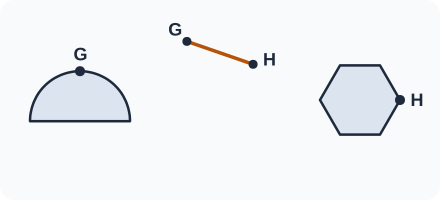
A wiring diagram for a metal-cased washing machine shows the case connected to a symbol made of three horizontal lines that get shorter toward the bottom. What does this symbol represent?

Show the answer

Answer: C

Correct answer: An earth ground, a real safety connection to the earth. Three horizontal lines that get shorter toward the bottom are the earth-ground symbol. Connecting an appliance's metal case to earth ground is a safety measure, giving fault current a path other than through a person.

  • A: Chassis ground is usually drawn like a rake or comb; the stacked shrinking lines mark earth ground.
  • B: A cell is two unequal lines of a different form, and nothing here supplies energy to the case.
  • C (correct): The three lines shrinking toward the bottom are the earth-ground symbol, used for safety in building wiring.
  • D: A signal or circuit ground is often drawn as a plain triangle and is just a voltage reference, not a safety path to the earth.
Question 78 · EI · medium

On a cabin's power diagram, a circle labeled G is turned by a small wind turbine, and its output wires lead to a charge controller and a battery bank. What role does the G component play?

Show the answer

Answer: A

Correct answer: A source that turns mechanical rotation into electrical energy. Motors and generators are both circles, labeled M and G. Decide by the direction of energy flow: this machine is driven mechanically and feeds the circuit, so it is a generator, an electrical source.

  • A (correct): The wind drives the machine and it feeds the circuit, so it is a generator acting as a source.
  • B: That describes a motor, which receives power to spin something; here the wind does the spinning.
  • C: A current meter is a circle labeled A; G marks a generator.
  • D: Ground uses line, rake or triangle symbols, not a circle labeled G.
Question 79 · EI · medium

A student wants to read the voltage of a lamp in a battery circuit but connects the voltmeter in series with the lamp instead of across it. What happens?

Show the answer

Answer: B

Correct answer: The lamp goes dark and the meter reads nearly the full battery voltage. A voltmeter is built with very high resistance so it can sit across a part without drawing current. Placed in series, that high resistance becomes part of the only path, so the current drops almost to zero and the lamp goes out. With almost no current through the lamp, the lamp has almost no voltage drop, so the meter shows nearly the whole battery voltage.

  • A: Almost no current flows, but nearly the whole battery voltage then appears across the meter itself; zero current does not mean zero voltage.
  • B (correct): A voltmeter has very high resistance, so in series it blocks almost all the current; the lamp goes dark and nearly all the battery voltage appears across the meter.
  • C: The meter would only read the lamp's voltage if its leads were placed across the lamp, in parallel.
  • D: That is the danger of an ammeter placed across a source; a voltmeter's high resistance does the opposite.
Question 80 · EI · medium

On a fixed 24 V supply, a 48 Ω load is replaced by a 16 Ω load. How does the power drawn change?

Show the answer

Answer: D

Correct answer: From 12 W to 36 W. With voltage fixed, use

Before:

W

After:

W

Cutting the resistance to one-third triples the power.

  • A: This assumes power rises and falls with resistance, which is only true at fixed current.
  • B: This squares the threefold resistance change, but resistance is not squared in the formula.
  • C: These are the currents in amperes, 24 divided by each resistance, not the powers.
  • D (correct): At fixed voltage, : 576 divided by 48 is 12 W, and 576 divided by 16 is 36 W.
Question 81 · EI · medium

A particle carrying a charge of C moves at 800 m/s through a 0.25 T magnetic field. Its velocity makes a 30 degree angle with the field lines. What magnetic force acts on the particle?

Show the answer

Answer: C

Correct answer: 5 × 10⁻⁴ N. Use

  • A: This ignores the angle and treats the particle as moving straight across the field, where .
  • B: This uses ; the magnetic force depends on the sine of the angle between velocity and field.
  • C (correct): N.
  • D: This is 100 times too large, an exponent slip when multiplying the powers of ten.
Question 82 · EI · hard

A 3 Ω copper wire is pulled through a die so that it becomes twice as long. The volume of metal stays the same, and the temperature does not change. What is the new resistance?

Show the answer

Answer: C

Correct answer: 12 Ω. With the same volume, doubling the length means the cross-sectional area must be cut in half. Both changes raise resistance.

  • A: This accounts for the doubled length but forgets that stretching also makes the wire thinner.
  • B: Length and area do change by the same factor, but in opposite directions, so their effects multiply rather than cancel.
  • C (correct): Doubling the length at constant volume halves the area, so R is multiplied by 2 and by 2 again: 12 Ω.
  • D: This treats the area as falling to one fourth, as if the diameter were halved, but at constant volume the area only halves.
Question 83 · EI · hard

Two capacitors sit inside equipment that has been unplugged. Capacitor A is 1,000 F charged to 100 V. Capacitor B is 250 F charged to 300 V. Which stores more energy, and how much does it store?

Show the answer

Answer: A

Correct answer: Capacitor B, 11.25 J. Use

with capacitance in farads.

B has one quarter of the capacitance but nine times the , so it stores more.

  • A (correct): J, more than A's 5 J, because voltage is squared.
  • B: A stores 5 J, but its larger capacitance does not outweigh B's three-times-higher voltage, which is squared.
  • C: This leaves out the factor of one half in .
  • D: This leaves out the one half and also misses that B's higher voltage gives it more energy.
Question 84 · EI · hard

A single silicon diode, modeled at 0.7 V, feeds a resistor load from a 60 Hz sine-wave source with an 18 V peak, forming a half-wave rectifier. What is the peak load voltage, and how many output humps occur each second?

Show the answer

Answer: B

Correct answer: 17.3 V and 60 humps per second. In a half-wave rectifier, current passes through one diode, so the load peak is

V

The diode conducts during only one half of each cycle, so a 60 Hz source gives 60 humps per second, with flat gaps between them.

  • A: This treats the circuit as a bridge, subtracting two diode drops and counting two humps per cycle.
  • B (correct): One diode drops 0.7 V, leaving 18 − 0.7 = 17.3 V, and a half-wave rectifier passes one hump per input cycle, 60 per second.
  • C: The voltage is right, but a half-wave rectifier blocks every other half-cycle, so it gives only one hump per cycle.
  • D: The hump count is right, but this ignores the 0.7 V drop across the conducting silicon diode.
Question 85 · EI · hard

An ideal 15 V source drives three resistors in series: 2.2 kΩ, an unknown resistor R, and 1.8 kΩ. A voltmeter across the 1.8 kΩ resistor reads 4.5 V. What is R?

Show the answer

Answer: B

Correct answer: 2 kΩ. The known drop gives the loop current:

A

or 2.5 mA.

Total resistance:

Ω

Subtract the known parts:

Ω

or 2 kΩ.

  • A: This is the total resistance of the whole loop, not the unknown resistor.
  • B (correct): The current is 4.5 V over 1.8 kΩ, or 2.5 mA, so the total is 6 kΩ and R is 6 minus 4, or 2 kΩ.
  • C: This subtracts only the 1.8 kΩ resistor from the total and forgets the 2.2 kΩ resistor.
  • D: This has the right digits but loses the kilo prefix in the unit conversion.

Auto Information

10 questions · 7 min on the real test
Question 86 · AI · easy

What is the main advantage of a limited-slip differential over an open differential?

Show the answer

Answer: B

Correct answer: It resists large wheel-speed differences so more torque reaches the wheel with traction. An open differential sends equal torque to both axles, limited by the wheel with less grip, so a wheel on ice can leave the other wheel with almost nothing. A limited-slip differential resists that speed difference so more torque goes to the wheel that has traction.

  • A: That describes a locker that is always engaged, which would scrub tires in turns on dry pavement.
  • B (correct): Clutch packs, special gearing or viscous fluid limit slip so the gripping wheel can still push.
  • C: A limited-slip unit does not add a reduction; the final drive sets the ratio.
  • D: That is the job of a torque converter, not a differential.
Question 87 · AI · easy

In engine specifications, what does stroke length measure?

Show the answer

Answer: D

Correct answer: The distance the piston travels from TDC to BDC. Stroke length is a distance along the cylinder: how far the piston moves between TDC and BDC. It equals twice the crank throw.

  • A: That is the bore, the other main cylinder measurement.
  • B: That space is the clearance volume, which is used in the compression ratio, not a length of travel.
  • C: A four-stroke cycle has four piston movements, but stroke length is a distance, not a count.
  • D (correct): Stroke length is the straight-line travel of the piston from one dead center to the other.
Question 88 · AI · medium

During hard braking, the ABS controller sees that the left rear wheel is slowing much faster than the vehicle. What does the system do next?

Show the answer

Answer: B

Correct answer: The modulator briefly reduces, holds and reapplies pressure at that wheel. Wheel-speed sensors report each wheel's speed to the controller. When one wheel slows far faster than the car, the controller commands the hydraulic modulator to cut, hold and reapply pressure at that wheel rapidly, so the tire keeps rolling and the driver can still steer.

  • A: ABS acts on the circuit of the affected wheel and keeps braking the car; it does not cut all braking.
  • B (correct): ABS cycles pressure to the wheel that is about to lock many times per second, keeping it rolling near peak grip.
  • C: Adding pressure to a wheel that is already near lock would make it lock and skid.
  • D: The amber lamp signals a detected fault; a wheel nearing lock is the normal situation ABS is built to handle.
Question 89 · AI · medium

A commuter makes many short trips in cold weather, and the engine rarely warms up fully. At the next oil check the oil smells strongly of gasoline and seems thinner than normal. What is the most likely issue?

Show the answer

Answer: D

Correct answer: Fuel diluting the engine oil. Fuel dilution happens when unburned fuel reaches the oil, often from many short trips, rich running, or a leaking injector. The oil smells of gasoline and becomes thinner, so changes on the severe-service schedule and occasional longer drives help.

  • A: Coolant contamination usually makes oil look milky, not smell of gasoline.
  • B: That raises oil pressure; it does not add a gasoline smell to the oil.
  • C: The problem described is oil that has become thinner, not thicker.
  • D (correct): Short trips that never fully warm the engine let fuel collect in the oil, thinning it and giving a gasoline smell.
Question 90 · AI · medium

An indirect TPMS has no pressure sensors in the wheels. Why can it still notice that one tire is low?

Show the answer

Answer: A

Correct answer: A low tire has a smaller rolling radius, so it turns slightly faster than the others. A tire that is low sags, so its effective radius gets smaller. To cover the same distance it must turn a little faster. Indirect TPMS uses the antilock brake wheel-speed sensors to spot that faster-turning wheel.

  • A (correct): The system compares antilock brake wheel-speed signals and flags the wheel spinning faster.
  • B: A smaller rolling radius makes the wheel spin faster, not slower, at the same road speed.
  • C: Wheel-speed sensors measure rotation, not temperature.
  • D: Radio-reporting sensors are part of direct TPMS, not indirect TPMS.
Question 91 · AI · medium

Many diesel fuel systems include a water separator in addition to a particle filter. What is the main reason?

Show the answer

Answer: C

Correct answer: Water in diesel fuel can damage the precise injection parts. A fuel filter stops solid particles, but diesel systems also face water contamination. Because water harms the high-precision pump and injector parts, a water separator removes it before the fuel reaches them.

  • A: Water does not improve diesel ignition quality; the separator exists to protect parts, not to adjust a fuel rating.
  • B: Small amounts of water do not overfill a tank; the concern is what water does inside the injection equipment.
  • C (correct): Diesel injection pumps and injectors have very tight clearances, and water can corrode and wear them, so it is separated out first.
  • D: A fuel-system water separator handles fuel, not exhaust gases; exhaust treatment happens after combustion.
Question 92 · AI · medium

Which item is part of a car's unsprung mass?

Show the answer

Answer: B

Correct answer: A front brake rotor and caliper. Sprung mass is everything the springs hold up: body, frame, engine, people and cargo. Unsprung mass moves with the wheel below the springs: tire, wheel, hub, brakes and part of the arms. Less unsprung mass helps the tire follow bumps.

  • A: The engine sits on the body or frame above the springs, so it is sprung mass.
  • B (correct): The brakes move up and down with the wheel below the springs, so they are unsprung mass.
  • C: Occupants and cargo are carried by the springs, so they are sprung mass.
  • D: The body is held up by the springs, making it sprung mass.
Question 93 · AI · medium

On a degree wheel, zero marks TDC as intake begins. A mechanic rotates the engine by hand until cylinder 1 reads 270 degrees on the wheel. What is that cylinder doing at this point?

Show the answer

Answer: A

Correct answer: Compression, piston moving up. Each stroke takes 180 degrees: intake 0 to 180, compression 180 to 360, power 360 to 540, exhaust 540 to 720. Since 270 degrees lies between 180 and 360, the cylinder is on compression, and the piston is rising from BDC toward TDC.

  • A (correct): 270 degrees falls between 180 and 360 degrees, the compression stroke, when the piston travels from BDC up to TDC.
  • B: Intake covers only 0 to 180 degrees; by 270 degrees the piston has already passed BDC and turned upward.
  • C: Power runs from 360 to 540 degrees; 270 degrees is a full stroke earlier.
  • D: The piston is rising, but exhaust spans 540 to 720 degrees, not 180 to 360 degrees.
Question 94 · AI · hard

A van stalls a few times a week, but only after long drives on hot days, and the check-engine lamp comes on each time. The owner plans to disconnect the battery to reset the computer before taking it to a shop. What is the best advice?

Show the answer

Answer: A

Correct answer: Record when it happens and leave the codes stored. Intermittent faults are hard to find once they go away, so the evidence must be preserved. Write down the temperature, drive length and conditions, and keep the stored codes and freeze-frame data intact; clearing codes or disconnecting the battery would erase exactly what the technician needs.

  • A (correct): Notes on conditions, together with stored codes and freeze-frame data, let the technician reproduce an intermittent fault.
  • B: Removing power erases codes, freeze-frame data and monitor status, which are the evidence the shop needs.
  • C: Stalling has many possible causes, and replacing a part without evidence often wastes money.
  • D: Clearing removes the freeze-frame snapshot and resets monitors, and the cause will remain whether or not the lamp returns.
Question 95 · AI · hard

A battery reads 12.6 V with no load. While the starter draws 150 A, the battery's terminal voltage falls to 10.2 V. Using the model

what is the battery's internal resistance?

Show the answer

Answer: A

Correct answer: 0.016 Ω. Rearrange the model:

V

Only the voltage lost inside the battery is divided by the current.

  • A (correct): The internal drop is 12.6 - 10.2 = 2.4 V, and 2.4 V / 150 A = 0.016 ohm.
  • B: This divides the loaded terminal voltage by the current instead of the voltage lost inside the battery.
  • C: This divides the no-load voltage by the current, which is not the internal drop.
  • D: This has the right method but slips a decimal place; 2.4 / 150 is 0.016.

Shop Information

10 questions · 6 min on the real test
Question 96 · SI · easy

Which of these metals is a ferrous metal?

Show the answer

Answer: C

Correct answer: Carbon steel. The word ferrous comes from the Latin ferrum, meaning iron, so a ferrous metal is one that is mostly iron. Steel is iron with a small amount of carbon added, which makes it stronger. Most ferrous metals are attracted to a magnet and rust when exposed to moisture, which can help identify them in the shop. Brass and bronze can look like steel when painted, but they are copper alloys, and copper and aluminum contain no iron.

  • A: Aluminum contains no iron as a principal component, so it is nonferrous.
  • B: Cartridge brass is a copper-zinc alloy and is nonferrous.
  • C (correct): Steel is made mostly of iron, which is what makes a metal ferrous.
  • D: Copper is a nonferrous metal.
Question 97 · SI · easy

Before operating a metal lathe, what should a machinist do with a wedding ring and a neck chain?

Show the answer

Answer: A

Correct answer: Remove both before starting the lathe. Rotating chucks and workpieces can catch dangling or loose items such as jewelry, sleeves and hair. The control is to remove rings, chains and similar items before running the machine so nothing that could be caught enters the danger zone.

  • A (correct): Rings and necklaces can be caught by rotating parts and pull a finger or the neck toward the machine.
  • B: A loose glove near a rotating chuck is another entanglement hazard, not a fix for the ring.
  • C: A tucked chain can still work loose; removing jewelry is the reliable control.
  • D: Even a slow chuck can wind in a ring or chain faster than a person can react.
Question 98 · SI · medium

While smoothing the edge of a steel bracket with a metalworking file, why should the worker ease off pressure on the return stroke?

Show the answer

Answer: A

Correct answer: The teeth cut in one direction, so pressing on the return stroke only dulls them. File teeth cut in a preferred direction, the forward stroke. Pressing on the return stroke dulls the teeth without doing useful work, so lift or lighten the file on the way back.

  • A (correct): File teeth are designed to cut on the forward stroke; dragging them back under pressure wears them without removing metal.
  • B: The return stroke is not the cutting stroke, so it removes little or no material.
  • C: Hand filing does not create enough heat to bend a file; the concern is dulling the teeth.
  • D: The handle on the tang protects the hand; it does not set the cutting direction.
Question 99 · SI · medium

A feature control frame on a machine table drawing calls for flatness on the top surface. What does this requirement control?

Show the answer

Answer: A

Correct answer: How far the surface may depart from a perfect plane. GD&T symbols control shape, orientation or location. Flatness is a form control: it limits how far the surface may vary from a true plane. It does not set size, orientation to a datum, or surface roughness.

  • A (correct): Flatness is a form control that limits how uneven the surface itself may be.
  • B: Angle to a datum is an orientation control such as perpendicularity, not flatness.
  • C: Thickness is a size dimension with its own tolerance; flatness does not set it.
  • D: Smoothness is set by a surface finish or roughness note, which is a separate requirement.
Question 100 · SI · medium

A nut on a single-start 1/2-13 bolt must move 1/2 inch along the bolt. Ideally, how many full turns does this take?

Show the answer

Answer: D

Correct answer: 6.5 turns. 13 TPI means each turn advances the nut 1/13 inch. The number of turns is the distance times the threads per inch:

turns
  • A: Thirteen turns would advance the nut a full inch, twice the required distance.
  • B: This divides 13 by 0.5 instead of multiplying, giving four times the correct count.
  • C: This divides 0.5 by 13, which gives a distance-like number, not the turns needed.
  • D (correct): Half an inch at 13 threads per inch requires 0.5 x 13 = 6.5 turns.
Question 101 · SI · medium

A sheet-metal worker has bent and straightened a steel panel edge several times. The metal now feels much stiffer and has started to show tiny cracks at the bend. What should be done before more forming?

Show the answer

Answer: B

Correct answer: Anneal it by heating and cooling slowly. Bending metal cold makes it harder, stronger and less ductile; this is work hardening. Annealing, heating the metal and letting it cool slowly, softens it again so it can be formed without cracking.

  • A: Quenching hardens steel and makes it more brittle, which would make cracking worse.
  • B (correct): Cold bending work-hardened the metal; annealing restores softness and ductility so forming can continue.
  • C: More cold work hardens the metal further and drives the cracks to failure.
  • D: A coating is a surface layer; it does not change the hardness or ductility of the steel underneath.
Question 102 · SI · medium

A maintenance worker must replace a drive belt on a shop machine that could start up unexpectedly or release stored energy. What is the best practice before starting the work?

Show the answer

Answer: D

Correct answer: Follow the machine's energy-isolation procedure. For servicing where a machine could energize unexpectedly, OSHA's hazardous-energy rule and the equipment instructions call for a defined isolation procedure. Simply switching off is not enough.

  • A: An off switch alone may not prevent unexpected startup or stored-energy release during servicing.
  • B: A person watching a switch is not a reliable substitute for proper isolation.
  • C: Working on a belt while the machine runs exposes the worker to nip points and moving parts.
  • D (correct): Covered servicing calls for isolating and controlling hazardous energy, not just turning a switch off.
Question 103 · SI · medium

A mechanic pushes with 80 lb at a right angle on a breaker bar, 18 inches from the center of a lug nut. How much torque does the nut receive?

Show the answer

Answer: D

Correct answer: 120 lb-ft. Change the distance to feet first: 18 in divided by 12 = 1.5 ft. Then

lb

-ft.

  • A: This multiplies 80 by 18 inches but labels the result in pound-feet; 1,440 is pound-inches.
  • B: This divides the force by the distance in feet instead of multiplying.
  • C: This adds the force and the distance; torque is their product, not their sum.
  • D (correct): Converting 18 in to 1.5 ft and multiplying by 80 lb gives 120 lb-ft.
Question 104 · SI · hard

In an idealized lap joint, five identical rivets share a direct load of 1,750 N equally. Which statement is most accurate?

Show the answer

Answer: A

Correct answer: Each carries 350 N, but strength still needs checking. With equal sharing, load per rivet = 1,750

N / 5 = 350 N

That number is only the arithmetic share; real capacity depends on rivet material, bearing, net-section tearing, edge distance and fatigue.

  • A (correct): 1,750 / 5 = 350 N, yet bearing, tearing, edge distance and fatigue can still control the joint.
  • B: The load share is right, but equal division alone does not prove any rivet or plate is strong enough.
  • C: This divides by 4 instead of the 5 rivets that share the load.
  • D: This multiplies the load by the rivet count instead of dividing it.
Question 105 · SI · hard

Partway through a rip cut on a table saw, the board begins to pinch the blade and the motor starts to bog down. What is the safest next action?

Show the answer

Answer: A

Correct answer: Hold the board steady, switch off the saw, and let the blade stop before freeing the stock. Binding and bogging are warning signs to stop. The safe response is to keep control, turn the machine off, let the blade come to a complete stop, and then find the cause, such as a misaligned fence or a missing riving knife, before cutting again.

  • A (correct): Keeping control of the stock and shutting down before touching anything avoids the conditions that cause kickback.
  • B: Pulling a pinched board back against a spinning blade is a classic way to trigger kickback straight at the operator.
  • C: Forcing a binding cut increases pinching and the chance that the stock is thrown.
  • D: Reaching near or over a running blade puts the hand in the danger zone and in the line of fire if the stock kicks back.

Mechanical Comprehension

15 questions · 22 min on the real test
Question 106 · MC · easy

When finding the useful output work a ramp does in raising a load, the load's weight should be multiplied by which distance?

Show the answer

Answer: A

Correct answer: The vertical height the load rises. Output work on a ramp is the work of lifting: weight times vertical rise, . The slope length belongs to the input side, where the effort acts along the surface.

  • A (correct): The job is lifting against gravity, so output work is weight times vertical rise.
  • B: Slope length is the input distance, the path of the push, not the output distance.
  • C: Gravity acts vertically, so the horizontal run does no lifting work on the load.
  • D: Adding the two distances has no physical meaning; output work uses only the rise.
Question 107 · MC · easy

On a belt drive, a small pulley presses against the belt to take up slack and route it around an obstacle, but it is not connected to any machine. What is this pulley called?

Show the answer

Answer: B

Correct answer: An idler. A pulley that only presses on or guides the belt, without powering or being powered by a machine, is an idler. It turns at whatever speed its own diameter dictates and leaves the speed ratio between driver and driven unchanged.

  • A: The driver is the pulley connected to the power source, such as the motor, and it supplies the motion.
  • B (correct): An idler guides or tensions the belt without driving anything, so it does not change the driver-to-driven speed ratio.
  • C: The driven pulley receives power and turns a machine, which this pulley does not do.
  • D: A movable block belongs to a rope hoist and rides up with the load; it is not part of a belt drive.
Question 108 · MC · easy

A metalworker heats a piece of hardened steel and lets it cool very slowly in the furnace so it becomes soft and easier to bend and shape. What is this process called?

Show the answer

Answer: D

Correct answer: Annealing. Annealing means heating a metal and cooling it slowly. It softens the metal and makes it easier to shape, the opposite of quenching, which hardens it.

  • A: Quenching is rapid cooling in water or oil, which makes steel harder and more brittle, not softer.
  • B: Tempering is a gentle reheat after quenching to reduce brittleness; it does not involve slow cooling from high heat to soften fully.
  • C: Creep is slow permanent deformation under a steady load at high temperature, not a heat treatment.
  • D (correct): Slow cooling from a high temperature softens metal and makes it easier to form.
Question 109 · MC · easy

A soldier tosses a ball straight up. Ignoring air resistance, which way does the net force on the ball point while it is still rising?

Show the answer

Answer: A

Correct answer: Straight down. After the ball leaves the hand, the only force on it is gravity, which pulls straight down. The ball keeps rising only because of the upward velocity it already has; the downward force is what slows it.

  • A (correct): Gravity is the only force after release, and it points down even while the ball is still moving up.
  • B: This confuses the direction of motion with the direction of force; no upward force acts once the ball leaves the hand.
  • C: Gravity acts the whole time; without it the ball would never slow down and turn around.
  • D: The force is gravity alone throughout the flight; only the velocity changes direction at the top.
Question 110 · MC · medium

A wooden fishing float has a density of 615 kg/m³. What fraction of its volume rides below the surface when it floats in seawater with a density of 1,025 kg/m³?

Show the answer

Answer: D

Correct answer: 60%. For a floating object, the submerged fraction equals object density divided by fluid density.

So 60% of the float is under the seawater and 40% sits above it.

  • A: This uses fresh water at 1,000 kg/m³; seawater is denser, so the float rides a little higher.
  • B: This is the fraction above the surface, not the fraction below.
  • C: This multiplies the two densities instead of dividing the float's density by the seawater's.
  • D (correct): The submerged fraction is the density ratio: 615 ÷ 1,025 = 0.60.
Question 111 · MC · medium

A 0.5 kg steel bracket (c = 450 J/(kg·K)) is warmed from 20°C to 120°C. How much heat does it absorb?

Show the answer

Answer: D

Correct answer: 22,500 J. Use the temperature change, which is the same in Celsius degrees and kelvins:

120 − 20 = 100

K.

  • A: This uses the final temperature, 120°C, as the change instead of the 100 degree rise.
  • B: This converts 120°C to 393 K and uses it as the change; a temperature change in kelvins equals the change in Celsius degrees.
  • C: This uses the starting temperature, 20°C, as the change.
  • D (correct): The temperature change is 100 K, and 0.5 × 450 × 100 = 22,500 J.
Question 112 · MC · medium

A mechanic tightens a lug nut to 110 N·m and then leaves the torque wrench pressing on it with that same torque, while nothing turns. How much work is being done on the nut during this time?

Show the answer

Answer: B

Correct answer: 0 J. Work is force times the distance moved along the force. Torque only measures a twisting tendency about a pivot. Because the nut is not turning, nothing moves through any distance, so the work done is 0 J even though 110 N·m of torque is applied.

  • A: This treats torque in N·m as if it were energy in joules; the units look alike, but the quantities differ.
  • B (correct): No part of the nut moves, so no work is done, no matter how large the torque.
  • C: This halves the torque, but with no motion, any nonzero amount of work is impossible.
  • D: Doubling the torque has no meaning here; work requires movement, and the nut is not turning.
Question 113 · MC · medium

An ideal single-mesh gearbox gives a 5:1 reduction. Its input shaft receives 10 N·m, and its output shaft turns in the opposite direction to the input. How much torque must the mounting bolts resist to keep the housing from rotating?

Show the answer

Answer: D

Correct answer: 60 N·m. The ideal output torque is

5 × 10 = 50

N·m. Because the input and output shafts turn in opposite directions, their torques on the housing add rather than cancel.

The mounting must resist

10 + 50 = 60

N·m.

  • A: Subtracting applies when the shafts turn the same way; here they turn opposite ways, so the torques add.
  • B: This is only the output torque; the input torque also acts on the housing.
  • C: Input and output torques are not equal in a reducer, so they cannot balance; the housing must be bolted down.
  • D (correct): With opposite shaft rotation, input and output torques add: 10 + 50 = 60 N·m.
Question 114 · MC · medium

A leveling device uses a screw with an ideal mechanical advantage of 40 to push a sloped block with a slope ratio of 6 under a machine foot. What is the ideal mechanical advantage of the combination?

Show the answer

Answer: B

Correct answer: 240. The screw multiplies the hand force by 40, and the block multiplies that output again by 6.

  • A: This adds the two advantages; in series each stage multiplies the output of the one before it.
  • B (correct): Ideal advantages of machines in series multiply, so 40 times 6 = 240.
  • C: This subtracts the advantages, which has no basis; series stages multiply.
  • D: This divides 40 by 6; the block multiplies the screw's output force again rather than reducing it.
Question 115 · MC · medium

A test cart starts from rest and accelerates evenly at 4 m/s² over a distance of 18 m. No stopwatch is used. What is the cart's speed at the end of the 18 m?

Show the answer

Answer: B

Correct answer: 12 m/s. With no time given, use the time-free relation.

So

v = 12 m/s
  • A: This stops at v² = 144 and forgets to take the square root.
  • B (correct): From v² = 0 + 2(4)(18) = 144, the speed is √144 = 12 m/s.
  • C: This leaves out the factor of 2, computing √(4 × 18) = √72.
  • D: This simply multiplies the acceleration by the distance, which does not give a speed.
Question 116 · MC · medium

Hydraulic oil runs through a supply hose at 27 liters each minute. The hose bore has a cross-sectional area of 2.5 square centimeters. What is the average oil velocity in the hose? (1 L = 1,000 cubic centimeters.)

Show the answer

Answer: D

Correct answer: 1.8 m/s. Convert flow to cubic centimeters per second, then use

  • A: This converts 180 cm/s to meters per second by dividing by 1,000 instead of 100.
  • B: This converts 180 cm/s by dividing by 10 instead of 100, a factor-of-ten unit slip.
  • C: This skips converting minutes to seconds, so the value is really 108 meters per minute, not per second.
  • D (correct): 27 L/min is 27,000/60 = 450 cubic centimeters per second; 450/2.5 = 180 cm/s, which is 1.8 m/s.
Question 117 · MC · hard

A farm pump lifts 1,800 kg of water up 15 m into a storage tank in 5 minutes. Its motor draws 1,200 W of electrical power the whole time. Using

g = 10 m/s²

what is the efficiency of the pump system?

Show the answer

Answer: A

Correct answer: 75%. Useful work:

1,800 × 10 × 15 = 270,000 J

Time: 5 min = 300 s, so useful power =

270,000 ÷ 300 = 900 W
  • A (correct): Useful output is 270,000 J in 300 s, or 900 W, and 900 ÷ 1,200 = 0.75.
  • B: This uses mass instead of weight, leaving out g, so the output comes out ten times too small.
  • C: This divides input by output; efficiency is output over input and can never exceed 100%.
  • D: This is the share of the input lost as heat and friction, not the useful share.
Question 118 · MC · hard

A toolbox is set down at rest on a ramp tilted 37 degrees. The static coefficient between them is 0.80 and the kinetic coefficient is 0.25. Use sin 37° ≈ 0.60, cos 37° ≈ 0.80, tan 37° ≈ 0.75 and

g = 10 m/s²

What is the toolbox's acceleration after it is released?

Show the answer

Answer: B

Correct answer: 0 m/s², because it stays at rest. First decide whether the toolbox slips. It stays put if

Here 0.75 is less than 0.80, so static friction balances the downhill pull and the acceleration is zero.

The kinetic formula is used only once an object is already sliding.

  • A: This applies the sliding formula with the kinetic coefficient, but the toolbox never starts sliding, so kinetic friction does not apply.
  • B (correct): Since tan 37° ≈ 0.75 is less than the static coefficient 0.80, static friction can hold the toolbox in place.
  • C: This uses g sin 37° and ignores friction entirely.
  • D: This uses g cos 37°, the component that presses into the ramp, as if it pulled the toolbox along the slope.
Question 119 · MC · hard

A toy maker cuts a uniform 450 N/m coil spring into two equal pieces and fits one piece into a pinball-style plunger. The plunger spring is pushed in 0.04 m against a 0.16 kg steel ball on a level, frictionless rail and let go. Ignoring losses, how fast is the ball moving when it leaves the spring?

Show the answer

Answer: C

Correct answer: 3.0 m/s. Half a uniform spring is twice as stiff: 900 N/m. Stored energy:

J
  • A: This uses the uncut 450 N/m stiffness for the ball launch; cutting a spring in half doubles its stiffness.
  • B: This halves the stiffness to 225 N/m; fewer coils make a spring stiffer, not softer.
  • C (correct): Each half is 900 N/m, storing 0.72 J at 0.04 m, and 0.72 J of kinetic energy on the 0.16 kg ball gives 3.0 m/s.
  • D: This stops at v squared = 9 and forgets to take the square root.
Question 120 · MC · hard

A hot-air balloon displaces 2,000 m³ of outside air with a density of 1.2 kg/m³. The heated air inside has a density of 0.95 kg/m³, and the envelope and basket together weigh 3,000 N. Using

g = 10 m/s²

what is the largest payload weight the balloon can lift?

Show the answer

Answer: B

Correct answer: 2,000 N. Buoyant force from the cool outside air:

1.2 × 10 × 2,000 = 24,000 N

Weight of the warm air inside:

0.95 × 10 × 2,000 = 19,000 N

Lift left over:

24,000 − 19,000 − 3,000 = 2,000 N

the most payload the balloon can carry.

  • A: This subtracts the warm air's weight but forgets to subtract the 3,000 N envelope and basket.
  • B (correct): Buoyancy of 24,000 N minus 19,000 N of warm air and 3,000 N of envelope and basket leaves 2,000 N for payload.
  • C: This forgets that the heated air inside also has weight that must be lifted.
  • D: This uses the inside air's density to find the buoyant force; buoyancy comes from the outside air displaced.

Assembling Objects

15 questions · 18 min on the real test
Question 121 · AO · easy

The left box shows separate flat pieces. Which figure shows how the pieces look when they are fitted together?

Left box: 2 separate flat pieces: a four-sided piece (about 54% of the total area), a triangle (about 46% of the total area).
Show the answer

Answer: B

Count the pieces first: every figure must use each piece exactly once, with nothing added. Then pick one distinctive piece, such as the largest one or one with a curved or sharply pointed edge, and look for it in each figure; pieces may be turned but never flipped over. A figure whose cut lines are in different places has pieces of different sizes and can be crossed out. Here the pieces fit together into a triangle.

  • A: This figure is a right triangle. The pieces in the left box do not have these shapes, so they cannot fill this outline without gaps or overlaps.
  • B (correct): This triangle is made of exactly the 2 pieces in the left box, each only turned and slid into place.
  • C: This figure has 3 pieces, but the left box has 2. Every piece must be used once, and nothing may be added.
  • D: A cut is in a different place, so the pieces do not match: one piece here covers about 31% of the shape, but the matching piece in the left box covers about 46%.
Question 122 · AO · easy

The left box shows two shapes, each with a lettered point, and a line with the same two letters on its ends. Which figure shows how the shapes connect when each end of the line is attached to the point with the same letter?

Left box: a half-circle with point G at the top of the curved side, a hexagon with point H at a corner, and a separate line with end G and end H.
Show the answer

Answer: D

Check one letter at a time. Point G is at the top of the curved side of the half-circle, and point H is at a corner of the hexagon. Cross out any figure where either end of the line lands somewhere else or where a shape has changed. The shapes may be turned, so find each point by its place on the shape (corner, middle of a side, center), not by up, down, left or right.

  • A: The line ends in the wrong place: it meets the hexagon at the middle of a side, but point H is at a corner.
  • B: The line ends in the wrong place: it meets the half-circle at a corner of the flat side, but point G is at the top of the curved side.
  • C: The line ends in the wrong place: it meets the half-circle at a corner of the flat side, but point G is at the top of the curved side and it meets the hexagon at the middle of a side, but point H is at a corner.
  • D (correct): The line joins the top of the curved side of the half-circle to a corner of the hexagon, the same spots as points G and H in the left box; turning a shape does not move a point on it.
Question 123 · AO · easy

The left box shows separate flat pieces. Which figure shows how the pieces look when they are fitted together?

Left box: 2 separate flat pieces: a four-sided piece (about 67% of the total area), a four-sided piece (about 33% of the total area).
Show the answer

Answer: A

Count the pieces first: every figure must use each piece exactly once, with nothing added. Then pick one distinctive piece, such as the largest one or one with a curved or sharply pointed edge, and look for it in each figure; pieces may be turned but never flipped over. A figure whose cut lines are in different places has pieces of different sizes and can be crossed out. Here the pieces fit together into a square.

  • A (correct): This square is made of exactly the 2 pieces in the left box, each only turned and slid into place.
  • B: A cut is in a different place, so the pieces do not match: one piece here covers about 47% of the shape, but the matching piece in the left box covers about 33%.
  • C: This figure is a rectangle. The pieces in the left box do not have these shapes, so they cannot fill this outline without gaps or overlaps.
  • D: This figure has 3 pieces, but the left box has 2. Every piece must be used once, and nothing may be added.
Question 124 · AO · easy

The left box shows two shapes, each with a lettered point, and a line with the same two letters on its ends. Which figure shows how the shapes connect when each end of the line is attached to the point with the same letter?

Left box: a diamond with point E at a wide corner, a square with point F at a corner, and a separate line with end E and end F.
Show the answer

Answer: B

Check one letter at a time. Point E is at a wide corner of the diamond, and point F is at a corner of the square. Cross out any figure where either end of the line lands somewhere else or where a shape has changed. The shapes may be turned, so find each point by its place on the shape (corner, middle of a side, center), not by up, down, left or right.

  • A: The line ends in the wrong place: it meets the square at the center, but point F is at a corner.
  • B (correct): The line joins a wide corner of the diamond to a corner of the square, the same spots as points E and F in the left box; turning a shape does not move a point on it.
  • C: The line ends in the wrong place: it meets the diamond at a sharp corner, but point E is at a wide corner and it meets the square at the middle of a side, but point F is at a corner.
  • D: The line ends in the wrong place: it meets the diamond at a sharp corner, but point E is at a wide corner.
Question 125 · AO · medium

The left box shows separate flat pieces. Which figure shows how the pieces look when they are fitted together?

Left box: 3 separate flat pieces: a four-sided piece (about 36% of the total area), a triangle (about 33% of the total area), a four-sided piece (about 31% of the total area).
Show the answer

Answer: A

Count the pieces first: every figure must use each piece exactly once, with nothing added. Then pick one distinctive piece, such as the largest one or one with a curved or sharply pointed edge, and look for it in each figure; pieces may be turned but never flipped over. A figure whose cut lines are in different places has pieces of different sizes and can be crossed out. Here the pieces fit together into a triangle.

  • A (correct): This triangle is made of exactly the 3 pieces in the left box, each only turned and slid into place.
  • B: A cut is in a different place, so the pieces do not match: one piece here covers about 62% of the shape, but the matching piece in the left box covers about 36%.
  • C: A cut is in a different place, so the pieces do not match: one piece here covers about 23% of the shape, but the matching piece in the left box covers about 31%.
  • D: This figure has 4 pieces, but the left box has 3. Every piece must be used once, and nothing may be added.
Question 126 · AO · medium

The left box shows two shapes, each with a lettered point, and a line with the same two letters on its ends. Which figure shows how the shapes connect when each end of the line is attached to the point with the same letter?

Left box: a triangle with point M at the center, a half-circle with point N at the top of the curved side, and a separate line with end M and end N.
Show the answer

Answer: A

Check one letter at a time. Point M is at the center of the triangle, and point N is at the top of the curved side of the half-circle. Cross out any figure where either end of the line lands somewhere else or where a shape has changed. The shapes may be turned, so find each point by its place on the shape (corner, middle of a side, center), not by up, down, left or right.

  • A (correct): The line joins the center of the triangle to the top of the curved side of the half-circle, the same spots as points M and N in the left box; turning a shape does not move a point on it.
  • B: The line ends in the wrong place: it meets the triangle at the middle of a side, but point M is at the center.
  • C: The line ends in the wrong place: it meets the half-circle at a corner of the flat side, but point N is at the top of the curved side.
  • D: The line ends in the wrong place: it meets the triangle at the middle of a side, but point M is at the center and it meets the half-circle at a corner of the flat side, but point N is at the top of the curved side.
Question 127 · AO · medium

The left box shows two shapes, each with a lettered point, and a line with the same two letters on its ends. Which figure shows how the shapes connect when each end of the line is attached to the point with the same letter?

Left box: a half-circle with point M at a corner of the flat side, a square with point N at the center, and a separate line with end M and end N.
Show the answer

Answer: B

Check one letter at a time. Point M is at a corner of the flat side of the half-circle, and point N is at the center of the square. Cross out any figure where either end of the line lands somewhere else or where a shape has changed. The shapes may be turned, so find each point by its place on the shape (corner, middle of a side, center), not by up, down, left or right.

  • A: One of the shapes here is a rectangle, but the left box has a square. Joining parts never changes a shape.
  • B (correct): The line joins a corner of the flat side of the half-circle to the center of the square, the same spots as points M and N in the left box; turning a shape does not move a point on it.
  • C: The line ends in the wrong place: it meets the half-circle at the middle of the flat side, but point M is at a corner of the flat side.
  • D: The line ends in the wrong place: it meets the half-circle at the top of the curved side, but point M is at a corner of the flat side.
Question 128 · AO · medium

The left box shows separate flat pieces. Which figure shows how the pieces look when they are fitted together?

Left box: 3 separate flat pieces: a four-sided piece (about 49% of the total area), a four-sided piece (about 28% of the total area), a four-sided piece (about 23% of the total area).
Show the answer

Answer: C

Count the pieces first: every figure must use each piece exactly once, with nothing added. Then pick one distinctive piece, such as the largest one or one with a curved or sharply pointed edge, and look for it in each figure; pieces may be turned but never flipped over. A figure whose cut lines are in different places has pieces of different sizes and can be crossed out. Here the pieces fit together into a parallelogram.

  • A: This figure is a rectangle. The pieces in the left box do not have these shapes, so they cannot fill this outline without gaps or overlaps.
  • B: This figure has 4 pieces, but the left box has 3. Every piece must be used once, and nothing may be added.
  • C (correct): This parallelogram is made of exactly the 3 pieces in the left box, each only turned and slid into place.
  • D: A cut is in a different place, so the pieces do not match: one piece here covers about 64% of the shape, but the matching piece in the left box covers about 49%.
Question 129 · AO · medium

The left box shows two shapes, each with a lettered point, and a line with the same two letters on its ends. Which figure shows how the shapes connect when each end of the line is attached to the point with the same letter?

Left box: a half-circle with point M at the middle of the flat side, a hexagon with point N at the middle of a side, and a separate line with end M and end N.
Show the answer

Answer: B

Check one letter at a time. Point M is at the middle of the flat side of the half-circle, and point N is at the middle of a side of the hexagon. Cross out any figure where either end of the line lands somewhere else or where a shape has changed. The shapes may be turned, so find each point by its place on the shape (corner, middle of a side, center), not by up, down, left or right.

  • A: One of the shapes here is a pentagon, but the left box has a hexagon. Joining parts never changes a shape.
  • B (correct): The line joins the middle of the flat side of the half-circle to the middle of a side of the hexagon, the same spots as points M and N in the left box; turning a shape does not move a point on it.
  • C: The line ends in the wrong place: it meets the half-circle at the top of the curved side, but point M is at the middle of the flat side.
  • D: The line ends in the wrong place: it meets the half-circle at a corner of the flat side, but point M is at the middle of the flat side.
Question 130 · AO · medium

The left box shows separate flat pieces. Which figure shows how the pieces look when they are fitted together?

Left box: 3 separate flat pieces: a four-sided piece (about 60% of the total area), a four-sided piece (about 22% of the total area), a four-sided piece (about 18% of the total area).
Show the answer

Answer: A

Count the pieces first: every figure must use each piece exactly once, with nothing added. Then pick one distinctive piece, such as the largest one or one with a curved or sharply pointed edge, and look for it in each figure; pieces may be turned but never flipped over. A figure whose cut lines are in different places has pieces of different sizes and can be crossed out. Here the pieces fit together into a rectangle.

  • A (correct): This rectangle is made of exactly the 3 pieces in the left box, each only turned and slid into place.
  • B: This figure is a square. The pieces in the left box do not have these shapes, so they cannot fill this outline without gaps or overlaps.
  • C: This figure has 4 pieces, but the left box has 3. Every piece must be used once, and nothing may be added.
  • D: A cut is in a different place, so the pieces do not match: one piece here covers about 43% of the shape, but the matching piece in the left box covers about 60%.
Question 131 · AO · medium

The left box shows two shapes, each with a lettered point, and a line with the same two letters on its ends. Which figure shows how the shapes connect when each end of the line is attached to the point with the same letter?

Left box: a square with point G at the middle of a side, a pentagon with point H at the middle of a side, and a separate line with end G and end H.
Show the answer

Answer: A

Check one letter at a time. Point G is at the middle of a side of the square, and point H is at the middle of a side of the pentagon. Cross out any figure where either end of the line lands somewhere else or where a shape has changed. The shapes may be turned, so find each point by its place on the shape (corner, middle of a side, center), not by up, down, left or right.

  • A (correct): The line joins the middle of a side of the square to the middle of a side of the pentagon, the same spots as points G and H in the left box; turning a shape does not move a point on it.
  • B: The line ends in the wrong place: it meets the pentagon at the center, but point H is at the middle of a side.
  • C: The line ends in the wrong place: it meets the square at a corner, but point G is at the middle of a side.
  • D: One of the shapes here is a hexagon, but the left box has a pentagon. Joining parts never changes a shape.
Question 132 · AO · hard

The left box shows two shapes, each with a lettered point, and a line with the same two letters on its ends. Which figure shows how the shapes connect when each end of the line is attached to the point with the same letter?

Left box: a parallelogram with point X at the middle of a long side, a triangle with point Y at the middle of a side, and a separate line with end X and end Y.
Show the answer

Answer: D

Check one letter at a time. Point X is at the middle of a long side of the parallelogram, and point Y is at the middle of a side of the triangle. Cross out any figure where either end of the line lands somewhere else or where a shape has changed. The shapes may be turned, so find each point by its place on the shape (corner, middle of a side, center), not by up, down, left or right.

  • A: The line ends in the wrong place: it meets the parallelogram at a sharp corner, but point X is at the middle of a long side.
  • B: The line ends in the wrong place: it meets the triangle at the center, but point Y is at the middle of a side.
  • C: One of the shapes here is a rectangle, but the left box has a parallelogram. Joining parts never changes a shape.
  • D (correct): The line joins the middle of a long side of the parallelogram to the middle of a side of the triangle, the same spots as points X and Y in the left box; turning a shape does not move a point on it.
Question 133 · AO · hard

The left box shows separate flat pieces. Which figure shows how the pieces look when they are fitted together?

Left box: 4 separate flat pieces: a five-sided piece (about 40% of the total area), a triangle (about 32% of the total area), a four-sided piece (about 15% of the total area), a four-sided piece (about 13% of the total area).
Show the answer

Answer: D

Count the pieces first: every figure must use each piece exactly once, with nothing added. Then pick one distinctive piece, such as the largest one or one with a curved or sharply pointed edge, and look for it in each figure; pieces may be turned but never flipped over. A figure whose cut lines are in different places has pieces of different sizes and can be crossed out. Here the pieces fit together into a trapezoid.

  • A: A cut is in a different place, so the pieces do not match: one piece here covers about 23% of the shape, but the matching piece in the left box covers about 32%.
  • B: A cut is in a different place, so the pieces do not match: one piece here covers about 25% of the shape, but the matching piece in the left box covers about 15%.
  • C: This figure is a parallelogram. The pieces in the left box do not have these shapes, so they cannot fill this outline without gaps or overlaps.
  • D (correct): This trapezoid is made of exactly the 4 pieces in the left box, each only turned and slid into place.
Question 134 · AO · hard

The left box shows two shapes, each with a lettered point, and a line with the same two letters on its ends. Which figure shows how the shapes connect when each end of the line is attached to the point with the same letter?

Left box: a hexagon with point T at the middle of a side, a half-circle with point U at the middle of the flat side, and a separate line with end T and end U.
Show the answer

Answer: B

Check one letter at a time. Point T is at the middle of a side of the hexagon, and point U is at the middle of the flat side of the half-circle. Cross out any figure where either end of the line lands somewhere else or where a shape has changed. The shapes may be turned, so find each point by its place on the shape (corner, middle of a side, center), not by up, down, left or right.

  • A: The line ends in the wrong place: it meets the half-circle at the top of the curved side, but point U is at the middle of the flat side.
  • B (correct): The line joins the middle of a side of the hexagon to the middle of the flat side of the half-circle, the same spots as points T and U in the left box; turning a shape does not move a point on it.
  • C: The line ends in the wrong place: it meets the half-circle at a corner of the flat side, but point U is at the middle of the flat side.
  • D: One of the shapes here is a pentagon, but the left box has a hexagon. Joining parts never changes a shape.
Question 135 · AO · hard

The left box shows separate flat pieces. Which figure shows how the pieces look when they are fitted together?

Left box: 4 separate flat pieces: a four-sided piece (about 31% of the total area), a four-sided piece (about 30% of the total area), a triangle (about 22% of the total area), a four-sided piece (about 17% of the total area).
Show the answer

Answer: D

Count the pieces first: every figure must use each piece exactly once, with nothing added. Then pick one distinctive piece, such as the largest one or one with a curved or sharply pointed edge, and look for it in each figure; pieces may be turned but never flipped over. A figure whose cut lines are in different places has pieces of different sizes and can be crossed out. Here the pieces fit together into a triangle.

  • A: This figure is a right triangle. The pieces in the left box do not have these shapes, so they cannot fill this outline without gaps or overlaps.
  • B: A cut is in a different place, so the pieces do not match: one piece here covers about 22% of the shape, but the matching piece in the left box covers about 30%.
  • C: A cut is in a different place, so the pieces do not match: one piece here covers about 49% of the shape, but the matching piece in the left box covers about 31%.
  • D (correct): This triangle is made of exactly the 4 pieces in the left box, each only turned and slid into place.

Finished?

See your score by subtest, which questions you missed and the lesson to review for each one.

Some questions are unanswered

Unanswered questions count as wrong. You can go back and answer them, or check your answers now.

About this test

Featured topics include fractions, decimals, signed numbers, genetics and ecology, circuit components and symbols, engine fundamentals, inclined planes and buoyancy. Out of the full lesson set, only Measuring and Layout Tools is not covered on this form.

Each question is original ASVAB-style content that appears in no other practice test. Plan a long uninterrupted block, follow the time limit, and review explanations by subtest when you finish. Your results are practice accuracy, not ASVAB, AFQT or line scores.

Take it with you: the free app

The same 124 lessons, 6,516 questions and 82 timed practice tests on your phone, plus flashcards with spaced review and progress tracking. Free to download, and it works offline.

  • Works offline
  • Spaced-review flashcards
  • Progress for every subtest
  • Menus in 59 languages
ASVAB Camp appGoogle Play